Champagne’s Hottest Summer Ever Leads to Exceptional 2026 Harvest and Historic Temporary Alcohol Limit Increase
Article Editorial Team
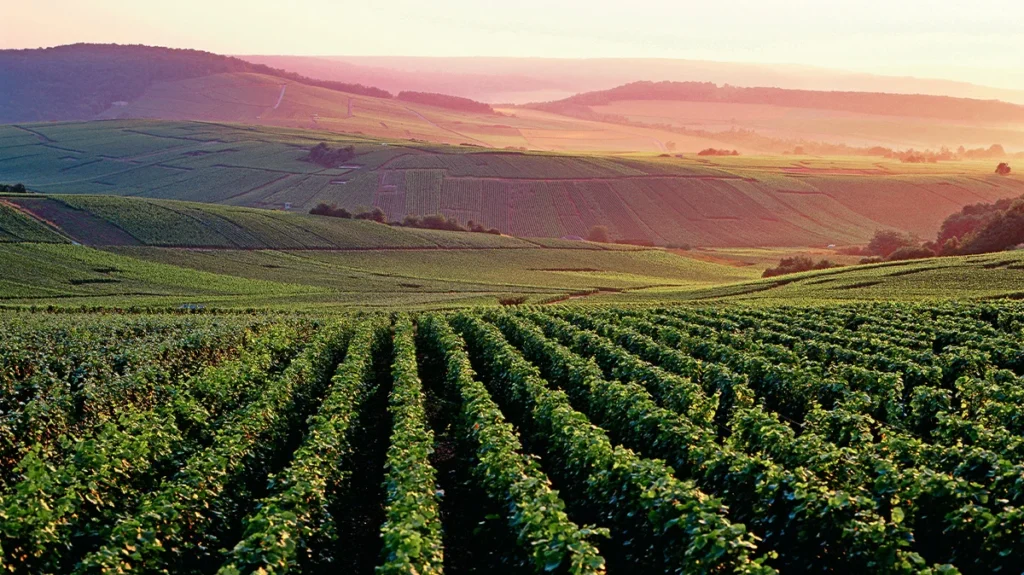
Although it is far too early to know definitively whether 2026 will go down in history as a truly legendary year for vintage Champagne—an assessment that wine experts generally prefer to make after aging the bottles for about a decade—this year’s growing season has already been widely heralded as exceptional for two distinct reasons. The first of these is the remarkable, pristine caliber of the grapes harvested across the entire prestigious French wine region.
"The quality is fantastic, thanks to a very sunny and dry year," says Mathieu Roland-Billecart, a seventh-generation family member and the chief executive officer of Champagne Billecart-Salmon. "There is absolutely no rot. This year was completely disease-free, like we have never seen before."
The second major reason is directly linked to the first. Because the region experienced a remarkably sunny and dry year featuring one of the hottest summers on record and the earliest recorded harvest date in Champagne’s long winemaking history, French agricultural and wine authorities made the extraordinary decision to temporarily raise the permitted alcohol limit for Champagne. For the 2026 vintage, the legal ceiling has been adjusted upward from the traditional 13 percent to a maximum of 15 percent.
While overall production levels were severely impacted—cutting yields almost in half due to a damaging spring frost followed by intense summer drought and sustained heatwaves—industry leaders are uniformly praising the high quality of the surviving fruit.
"The alcohol, acidity, and pH levels in the grapes from the 2026 harvest are similar to the legendary vintages from 1921, 1947, and 1959," notes Lori Russo, director of the Bureau du Champagne USA, the official United States representative organization for Champagne winegrowers and producers.
Russo explains that 2026 presented the most atypical growing season the historic region has ever encountered. The tumultuous year began with a harsh spring frost that severely affected nearly 40 percent of local vineyards. This was immediately followed by an unseasonably early flowering period and a punishing sequence of five separate summer heatwaves. These intense meteorological events rapidly accelerated the ripening process, culminating in the earliest harvest opening date recorded since the 1890s.
"Anyone who knows the history of Champagne knows that the region is incredibly resilient, and this year was no exception," Russo tells Robb Report. "The entire industry came together and responded, some quickly exiting their planned August holidays to ensure the harvest, which is done entirely by hand in Champagne, was successful."
The intense ambient temperatures and the resulting rapid maturation of the fruit facilitated exceptionally high sugar levels within the grapes. In winemaking, these elevated sugar concentrations directly translate to higher potential alcohol levels during fermentation. To provide a brief scientific overview, fermentation is the natural biological process whereby yeasts consume the natural sugars present in grape juice, converting them into alcohol—which remains in the finished wine—and carbon dioxide, which is traditionally trapped inside the bottle during secondary fermentation to create the signature bubbles of Champagne.

As Rémi Vervier, the chief executive officer and oenologist at Champagne Palmer & Co, points out, warmer growing conditions naturally lead to higher potential alcohol levels. This phenomenon can impart a greater sense of richness, concentration, and aromatic intensity to the resulting Champagne. However, it also presents a significant viticultural and winemaking challenge by potentially reducing natural acidity, making it vital for winemakers to actively preserve the freshness, precision, and structural balance that define the classic Champagne style.
Faced with the growing realization across the region that natural sugar levels would drive final alcohol volumes well above the standard legal threshold, regional authorities had to act with exceptional speed. Russo notes that the Comité Champagne quickly approved a regulatory amendment to permit alcohol levels above the standard 13 percent ceiling for this specific vintage, accommodating the unusually high sugar content found in the harvested grapes.
While the emergency measure allows alcohol levels to rise as high as 15 percent—a figure that is common in bold red wines but extremely elevated for the delicate and crisp style of Champagne—industry experts emphasize that the actual finished wines will land much closer to the traditional range. Expectations are that only a small number of wines from this harvest might reach approximately 13.1 to 13.2 percent alcohol by volume. Russo reassures consumers and connoisseurs that this minor adjustment "will not impact the sensory characteristics, quality, or style of the wines."
While the regulatory measure adopted for the 2026 harvest was introduced purely in response to exceptional circumstances and highly atypical ripening conditions, it should not be viewed as an indicator of any permanent, long-term change to the region’s strict production rules regarding alcohol limits. Nevertheless, as global weather patterns become increasingly unstable and unusually hot summers threaten to become a recurring reality, Champagne houses are proactively deploying a wide array of strategies. They are working diligently to safeguard their delicate vineyards against erratic environmental conditions while simultaneously employing sophisticated cellar techniques designed to minimize the physical impact of excessive heat.
The 2026 harvest was particularly notable for its intense fruit concentration paired with relatively low natural acidity, a combination that required precise adjustments inside the winery.
"We adapted our winemaking approach accordingly, with particular attention to maintaining balance and the expression of each terroir: gentle pressing to avoid excessive phenolics, very precise débourbage [natural clarification through rest and settling] to maintain purity, and cool fermentations to retain aromatic freshness," Vervier tells Robb Report.
Although Vervier notes that he can adjust additional technical winemaking parameters—such as careful yeast selection and the management of malolactic fermentation—to preserve the essential freshness and structural balance of the wine, he emphasizes that adaptation must also extend far beyond the cellar doors into vineyard management.
Russo explains that for more than four decades, the entire Champagne industry has been heavily investing in scientific research, agricultural innovation, and comprehensive climate change adaptation strategies.

"It was the first wine region in the world to assess its carbon footprint in 2002 to 2003 and begin to map a plan for reducing the region’s carbon footprint and adapt as much as possible to a changing climate," she states. These ongoing, long-term efforts encompass critical agricultural decisions, including how vines are planted, what specific rootstocks are utilized, and how emerging grape varieties might perform under increasingly warmer climatic conditions.
At Billecart-Salmon, this forward-thinking philosophy translates into an aggressive commitment to making their estate vineyards as resilient as possible against extreme environmental stress.
"That includes all our vineyards, which have been converted to organic or biodynamic farming, and the house’s requirement never to use weedkillers, so as to reinforce the root system of the vines," Roland-Billecart says.
Because individual vintages invariably possess their own distinct personalities and challenges, Billecart-Salmon—much like virtually every major Champagne house—maintains extensive reserves of older, aged wines within its subterranean cellars. This time-tested inventory enables producers to protect their signature house style by seamlessly blending wines across multiple harvest years, smoothing out the extreme fluctuations of unpredictable growing seasons.
Ultimately, time alone will tell whether 2026 will eventually be recognized and celebrated as a standout vintage year in its own right, or if its character will be gracefully absorbed into the intricate blends of non-vintage and multi-vintage cuvées that form the backbone of the region’s production.
"The first qualitative indicators are particularly encouraging," says Vervier. "All indications suggest that 2026 could give rise to wines of remarkable intensity, combining concentration, aromatic precision, and exceptional purity of fruit. Time will tell."
Whichever way the final bottles perform when they are eventually uncorked years from now, Russo offers a reassuring reminder that the historic region’s enduring spirit remains unbroken.
"Many things are changing, but we are confident there will always be Champagne," she says. Cheers to that.
Related News