Conservation Forage Program Hits 20,000-Acre Milestone, Bolstering North Dakota Grasslands
Article Editorial Team
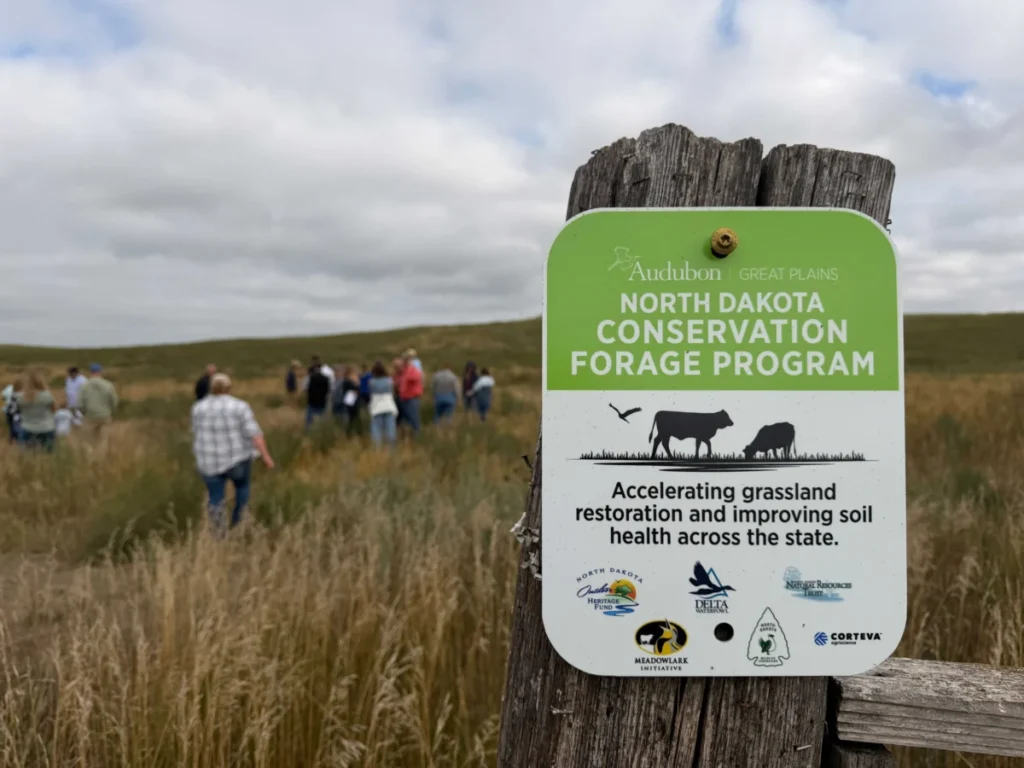
In a significant triumph for regional ecological health and agricultural sustainability, the Conservation Forage Program (CFP) has officially surpassed the 20,000-acre mark. This milestone serves as a testament to the power of collaborative land management, marking a successful chapter in the effort to restore vital grasslands across North Dakota. By bridging the gap between wildlife conservation and the needs of livestock producers, the program has established a unique, replicable model that balances the economic realities of farming with the urgent necessity of habitat restoration.
The achievement was formally commemorated this September in Bismarck, where a diverse group of stakeholders—including landowners, conservationists, agency officials, and policymakers—convened to reflect on the program’s trajectory. The gathering was more than a celebration of acreage; it was a recognition of the complex web of partnerships and the shared vision required to maintain the Great Plains as a productive, resilient ecosystem for both wildlife and human communities.
A Legacy of Stewardship: The Welch Family Farm
To truly understand the impact of the Conservation Forage Program, one must look at the land itself. Prior to the formal proceedings in Bismarck, attendees participated in a field tour of the Welch family farm, located south of the city near Menoken. The tour provided a tangible look at how the program translates policy into practice, showcasing restored grasslands that now serve as a functional component of a working agricultural operation.
The Welch farm is steeped in history, having been under the stewardship of the same family since 1876, when Oliver Welch first settled the land. Today, his descendants, Mike and Jon Welch, continue that legacy, navigating the inherent challenges of modern agriculture. Their operation is a testament to the concept of diversification, utilizing a mix of pasture and grain ground to ensure the farm remains viable for future generations.
For Mike Welch, the integration of conservation practices into his operation is not merely an environmental choice, but a strategic business decision. "Some years the grain pays the bills, and some years the cows pay the bills," Welch explained, noting that the flexibility provided by the program’s land-restoration model is key to keeping the family operation on a path toward its next 150 years. By restoring grasslands, the Welches have improved the quality of their grazing land while providing essential habitat for bird populations, illustrating that the interests of livestock producers and conservationists are not mutually exclusive.
Convening for a Sustainable Future
Following the immersive field tour, the celebration shifted to the North Dakota Heritage Center. The venue provided a fitting backdrop for a series of discussions regarding the history, challenges, and future of the Conservation Forage Program. The event featured a roster of speakers representing the various sectors that have made the program’s rapid growth possible.
The event highlighted remarks from Kristal Stoner, Vice President of Audubon Great Plains; Christa Kiedrowski, representing Senator John Hoeven’s office; John Devney, Chief Policy Officer of Delta Waterfowl; Dave Dewald, Board Chair of the Outdoor Heritage Fund; Scott McLeod, State Coordinator for North Dakota Partners for Fish and Wildlife; Erin Gaugler, a participating landowner; and Dr. Susan Felege, a Professor of Biology at the University of North Dakota specializing in wildlife ecology and management.
Each speaker offered a unique perspective on the efficacy of the CFP. For many, the program represents a shift in how conservation is perceived in the Dakotas. Rather than viewing conservation as a restriction on land use, the CFP framework treats it as an enhancement. By incentivizing the return of grasslands to the landscape, the program creates a "win-win" scenario: producers gain access to high-quality forage and improved soil health, while birds and other wildlife benefit from restored nesting and foraging grounds.
Evaluating the Impact and Looking Ahead
Throughout the presentations at the Heritage Center, a recurring theme was the potential for the Conservation Forage Program to serve as a national template. As the speakers reflected on the years of advocacy and logistical coordination required to reach the 20,000-acre milestone, there was a palpable sense of pride regarding the program’s ability to thrive in a complex agricultural landscape.
Dr. Susan Felege, whose work focuses on the intersection of biology and land management, emphasized the ecological importance of the restoration efforts. The return of native grasses is not just an aesthetic improvement; it is a critical intervention for declining grassland bird populations that rely on these ecosystems for survival. The data collected from sites like the Welch farm suggests that when these lands are managed with both forage and habitat in mind, biodiversity flourishes alongside agricultural output.
The discussion also touched upon the necessity of funding and the role of institutional support. The contributions of organizations like the Outdoor Heritage Fund and corporate partners such as Corteva were cited as essential catalysts. Without these financial and organizational pillars, the logistical hurdles—from seed sourcing to land management agreements—would have been insurmountable for individual landowners.
Collaboration as the Foundation of Success
The success of the Conservation Forage Program is rooted in the recognition that large-scale environmental goals cannot be met through top-down mandates alone. Instead, the program has thrived by meeting landowners where they are, acknowledging their role as the primary stewards of the land, and providing the resources necessary to implement sustainable changes.
The atmosphere in the room during the event was one of profound gratitude. The 20,000-acre milestone is not just a statistical achievement; it is a representation of thousands of individual decisions made by farmers and ranchers to prioritize the health of their land for the long term. Each acre enrolled in the program reflects a commitment to the idea that the Great Plains can support both a robust agricultural economy and a healthy, diverse wildlife population.
Audubon Great Plains, which has been a driving force behind the program, expressed deep appreciation for the network of partners that have turned the concept of the CFP into a reality. From the initial planning stages to the boots-on-the-ground implementation on family farms, the program has relied on the synergy between different groups, all working toward a common objective.
As the event concluded, the focus shifted from the milestone achieved to the work that lies ahead. The 20,000 acres are seen as a foundation, a starting point for a broader movement to revitalize the Great Plains. By continuing to foster these partnerships and refine the program’s model, the proponents of the Conservation Forage Program hope to expand its reach even further. The lessons learned in North Dakota—that collaboration is the most effective tool in the conservationist’s kit—will likely guide future efforts as the program looks to replicate its success elsewhere.
In the end, the gathering in Bismarck served as a reminder of what is possible when the agricultural community and conservation organizations align their goals. By ensuring that working lands remain productive and that grasslands are restored to their former vitality, the Conservation Forage Program is helping to secure a future where both people and wildlife can thrive on the Great Plains for generations to come. The milestone is a significant step, but for the landowners and partners involved, it is merely a signal that their model of conservation is working, and that the best work is still ahead.
Related News