Shutterstock Redefines the Creative Ecosystem by Merging Human-Made Assets with Advanced AI Workflows
Article Editorial Team
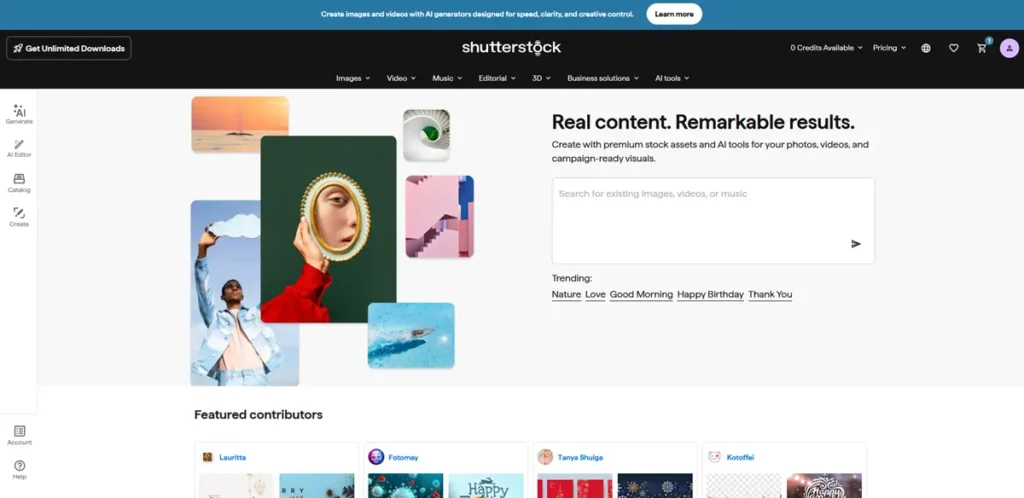
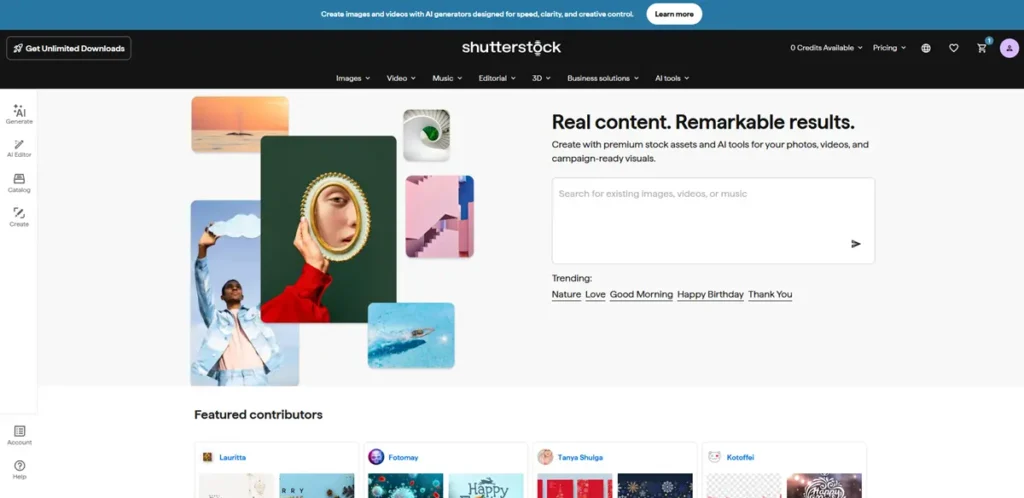
Shutterstock is reshaping the role of the traditional stock content library. With its latest platform evolution, the company is moving beyond simple asset discovery and positioning itself as a more complete creative environment powered by both human-made content and artificial intelligence.
The updated Shutterstock platform is designed specifically for businesses, agencies, marketers, and independent creators who need to produce visual content faster without losing control over quality, licensing, authenticity, or commercial usability. Instead of treating artificial intelligence as a standalone tool or a separate novelty, Shutterstock is integrating it directly into the core creative process. This unified approach allows users to seamlessly search, generate, edit, refine, and license content within one connected workflow.
At the center of this ongoing development is a clear, guiding philosophy: professional creative work should always start with trusted human-made assets and then be enhanced by artificial intelligence whenever speed, flexibility, or precise customization is required. This strategic shift addresses the evolving demands of modern media production, where traditional static asset libraries often fall short of the dynamic requirements set by digital marketers and brand strategists.
A New Direction for Shutterstock’s Creative Ecosystem
Shutterstock has long been universally associated with high-quality stock photography, video footage, digital illustrations, music tracks, editorial content, and other licensable assets. However, the operational needs of modern creative teams have changed significantly over recent years. Today’s global brands no longer want to simply download finished, static assets and try to awkwardly adapt their marketing campaigns around them. Instead, they demand content that can be dynamically shaped around specific campaign messages, distinct formats, targeted audiences, and unique visual identities.
This is where Shutterstock’s new platform direction becomes essential. The company is actively transforming its massive content library from a passive catalog into an active creative production system. Users can still begin their journeys by discovering premium, professionally shot assets, but they can now go much further by adapting and transforming those foundational assets using built-in artificial intelligence capabilities.
This evolution makes the platform considerably more useful for contemporary digital workflows, where a single multi-channel campaign may require multiple aspect ratios of the same visual, different formats tailored for distinct social media channels, or minute adjustments that make an asset fit an exceptionally specific creative brief.
Human-Made Content as the Starting Point
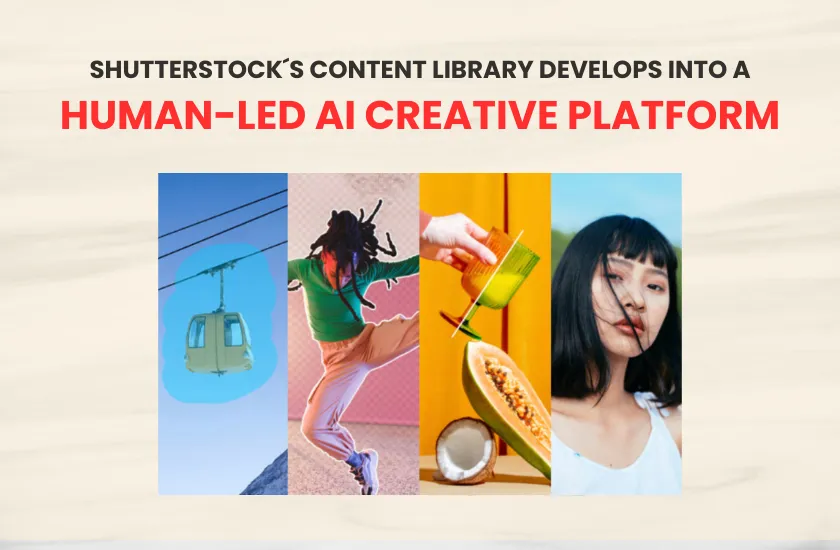
One of the strongest and most distinctive aspects of Shutterstock’s approach is its continued and unwavering focus on content originally created by real human contributors. While many standalone generative AI platforms begin with a blank text prompt and fabricate an output from absolute nothingness, Shutterstock’s foundational model is built firmly around existing, licensable creative material crafted by photographers, videographers, illustrators, and fine artists situated all around the world.
That vital human foundation gives the platform a fundamentally different role in the rapidly expanding artificial intelligence market. Rather than actively seeking to replace original human creative work, Shutterstock is utilizing artificial intelligence as a powerful mechanism to make that human work significantly more flexible and adaptable. For example, a user might find an image, a video clip, or a complex visual concept that is almost right for their project, and then use advanced artificial intelligence tools to adjust it for a specific advertising campaign, a strict corporate brand style, a unique layout, or a targeted message.
For corporations and enterprises that remain naturally cautious about the legal and ethical implications of using purely AI-generated visuals, this hybrid approach feels far more practical and secure. The creative process securely begins with real content sourced from a trusted provider, while artificial intelligence serves strictly as a tool for precise refinement and personal customization.
AI Features Designed for Practical Creative Work
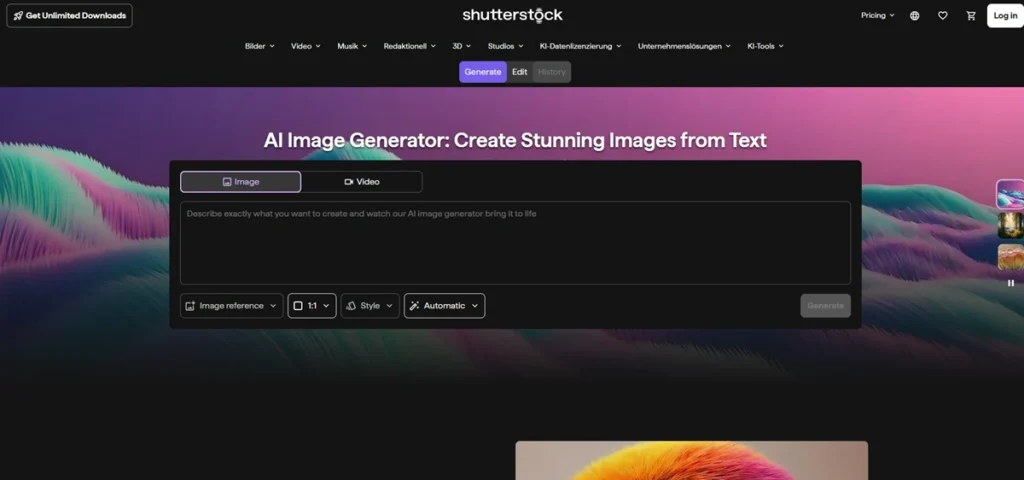
The newly updated Shutterstock platform brings together a diverse range of artificial intelligence-powered features specifically aimed at making creative production much easier and vastly more efficient. These sophisticated capabilities include AI-driven image and video generation, inline editing tools, conversational search functionality, prompt enhancement utilities, and reference-based workflows.
The conversational search function is particularly useful for busy professionals because it allows users to describe what they need using natural, conversational language. Rather than relying exclusively on short, rigid keyword combinations that often yield frustrating results, creative teams can search in a fluid manner that much better reflects the mood, context, or overarching visual direction of an upcoming project.
Reference-based features also play a critical role in maintaining high production standards. Content reference and first frame reference capabilities help users guide their artificial intelligence outputs much more precisely, ensuring visual consistency across batches of assets. This level of control is especially valuable for enterprise teams working on large-scale campaigns where visual style, tone, and overall brand alignment must remain strictly consistent across multiple different platforms and assets.
Furthermore, Shutterstock highlights its proprietary Model Match technology. This intelligent feature is intentionally designed to automatically match a user’s specific text prompt with the most appropriate artificial intelligence model available for the task. Instead of forcing busy users to understand complex technical differences between various underlying models, the platform helps select the optimal option automatically, rendering the AI workflow much simpler and vastly more accessible to everyday creators.
Reducing Friction in the Creative Process
Many modern creative teams currently find themselves forced to work across a fragmented array of disconnected software tools. They may search for stock content on one web platform, generate artificial intelligence concepts somewhere else entirely, edit those assets in yet another specialized software tool, and then separately have to check whether the final composite result is legally cleared for commercial use. This disjointed process can heavily slow down production schedules and create unnecessary operational uncertainty.
Shutterstock’s updated platform is specifically designed to solve that persistent problem by bringing the most important creative steps together under one roof. Asset discovery, artificial intelligence generation, editing, refinement, legal licensing, and customer support are now all parts of a single, unified ecosystem.
For corporate marketers and advertising agencies, this consolidation creates a remarkably streamlined workflow. Instead of constantly moving between different third-party tools and separate platforms, users can begin with initial inspiration, develop a cohesive visual direction, refine the resulting asset, and prepare the final content for deployment in real-world campaigns from a single centralized location.
In addition to its native web platform, the company is actively expanding into wider artificial intelligence environments. This includes the introduction of a dedicated Shutterstock app available directly inside ChatGPT, demonstrating that Shutterstock is committed to making its extensive assets and creative tools readily accessible within the exact spaces where users are already brainstorming, prompting, planning, and creating.
Built for Commercial Use
For commercial businesses and enterprise organizations, the ability to generate or edit visual content quickly is only one part of the equation. Content must also be completely suitable for public display, fully brand-safe, legally clear, and ready for immediate deployment in commercial advertising campaigns.
Shutterstock is directly addressing this critical enterprise need by emphasizing commercial-ready licensing structures, robust legal indemnification, and diligent human review processes for artificial intelligence-generated content. This positioning is exceptionally important because many major corporations remain cautious about how they utilize generative artificial intelligence, particularly within high-stakes advertising, mainstream marketing, and public brand communication.
By combining cutting-edge artificial intelligence production capabilities with dependable licensing support and thorough review processes, Shutterstock is successfully presenting its platform as a much more reliable option for organizations that want to capture the productivity benefits of artificial intelligence without exposing themselves to unnecessary legal, financial, or operational risks.
Contributors Remain Part of the Value Chain
Another notable element of Shutterstock’s platform evolution is the continued and protected role of its human contributors. When contributor-created content is edited or enhanced using the platform’s artificial intelligence tools and subsequently licensed through the system, those original contributors still remain eligible to earn standard royalties.
This represents a significant milestone in the broader, ongoing industry conversation regarding the intersection of artificial intelligence and professional creative work. Many photographers, graphic artists, and content creators have understandably expressed deep concern that the rise of artificial intelligence could drastically diminish the economic value of human-made assets. Shutterstock’s operational model takes a deliberately different direction by keeping genuine contributor content firmly at the absolute center of the workflow, utilizing artificial intelligence merely to extend its long-term usefulness and reach.
Within this balanced system, authentic human creativity provides the essential, irreplaceable foundation, while advanced artificial intelligence simply helps users adapt that foundational art for more specific, modern requirements.
Shutterstock’s Broader Role in the AI Economy
The platform update is also a vital component of Shutterstock’s larger corporate transformation as a comprehensive, artificial intelligence-focused technology company. Beyond serving everyday marketers, global brands, and creative professionals, Shutterstock is equally active in the broader artificial intelligence infrastructure space through its specialized Data Licensing and AI Services business.
This division actively supports major technology corporations and artificial intelligence developers with rights-cleared training data, meticulously curated datasets, model evaluation protocols, fine-tuning services, rigorous benchmarking, human-in-the-loop workflows, and expert creative feedback. These professional services help technology companies build, train, and improve complex artificial intelligence models using properly licensed content and expert human evaluation.
As a direct result of this dual strategy, Shutterstock is operating simultaneously on two distinct levels. It provides practical, everyday creative tools for end-users while concurrently supporting the foundational development of the very artificial intelligence systems that power modern creative technology.
A More Complete Platform for Modern Content Creation
Shutterstock’s latest strategic move reflects a major, industry-wide shift in how visual content is produced, managed, and deployed. Modern creative teams increasingly demand speed, flexibility, and production scale, but they simultaneously require absolute trust, visual consistency, and complete commercial confidence.
By successfully combining premium human-made assets with artificial intelligence generation, inline editing, conversational discovery, unified workflow tools, robust licensing support, and human expertise, Shutterstock is expanding far beyond the traditional confines of the legacy stock content model.
The platform is rapidly evolving into a fully connected creative system where users can easily find initial inspiration, shape raw ideas, customize visuals, and prepare content for real-world commercial use with unprecedented efficiency. For brands, advertising agencies, and independent creators alike, the core value proposition is straightforward: begin with trusted creative content, leverage artificial intelligence to make it precise, and move swiftly from initial concept to finished asset with absolute confidence.
Related News