United Airlines Rotates Widebody Fleet to Match Seasonal Demand on Newark-Athens Route
Article Editorial Team
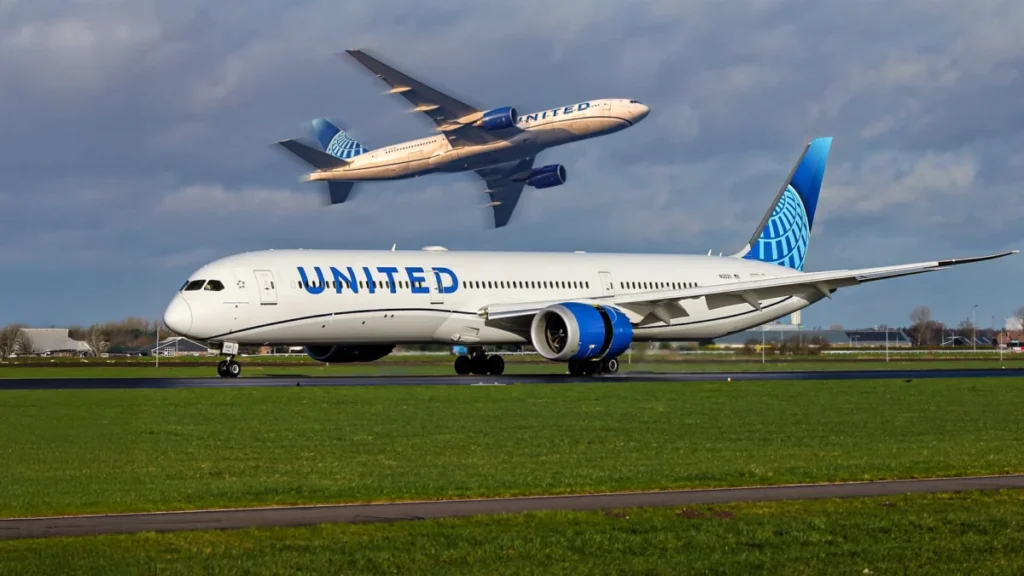
As global travel patterns shift with the changing seasons, airlines must constantly adapt their operations to ensure the right capacity is assigned to the right routes. A prime example of this strategic fleet management can be seen in United Airlines’ transatlantic operations, specifically on its route connecting Newark Liberty International Airport (EWR) to Athens International Airport (ATH). Rather than simply cutting service during slower periods, United utilizes a sophisticated rotation of distinct widebody aircraft types to perfectly match fluctuating passenger demand throughout the year.
The high-demand peak summer season is managed by the high-capacity Boeing 787-10 Dreamliner, while the veteran Boeing 777-200ER handles the shoulder periods. To bridge the gap during the low season, United assigns the Boeing 767-400ER to the route. This dynamic approach highlights how major network carriers treat their widebody fleets as precision instruments, tailoring capacity to seasonal transatlantic travel habits.
United’s Newark-Athens Rotations
While airlines frequently operate certain routes on a seasonal basis, major carriers also rotate specific aircraft types on year-round or extended seasonal routes to optimize efficiency. Instead of canceling its service from Newark to Athens entirely during off-peak months, United Airlines implements a rolling schedule of different widebody equipment. Throughout the busy summer months, United scheduled its larger Boeing 787-10 Dreamliner to fly to the Greek capital.
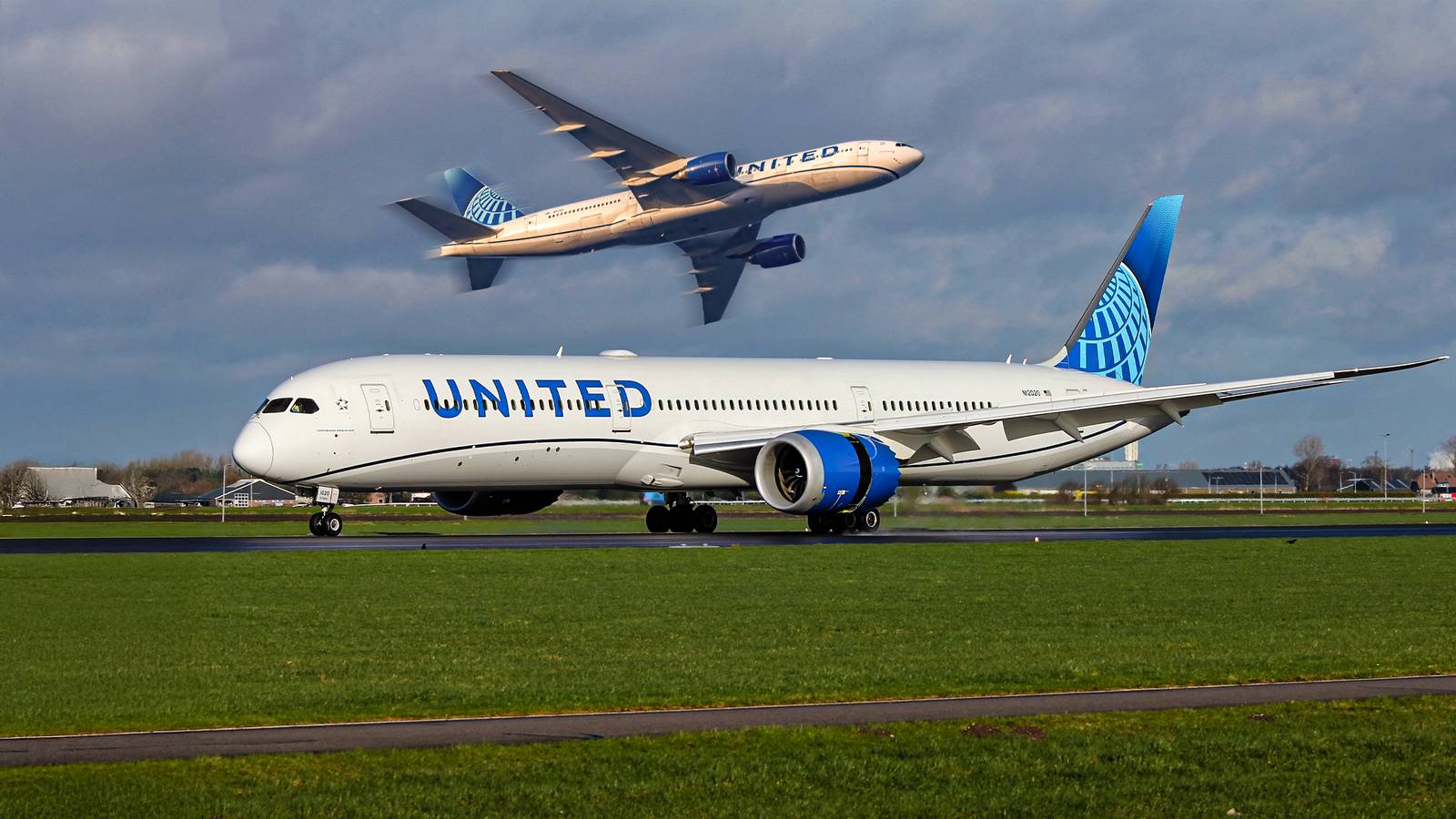
However, as peak demand subsides, the airline replaces the flagship Dreamliner with an older Boeing 777-200ER, followed eventually by a Boeing 767-400ER for the lowest-demand winter months. During the autumn shoulder period from September 24 to October 23, the mid-capacity 777-200ER takes over the route. The service continues to operate on a daily basis, and the published timetable remains largely uninterrupted.
Previously, the Boeing 787-10 was scheduled to depart Newark at 3:50 PM, arriving in Athens at 8:10 AM local time the following day, translating to a flight duration of approximately nine hours and 20 minutes. The updated 777-200ER schedule mirrors these timings almost identically. Unlike some of United’s flagship European business hubs, Athens functions as a heavily seasonal leisure destination.
Passenger demand typically reaches its zenith during the summer months and drops progressively through the autumn and winter. While the flights remain daily during the initial shoulder transition, overall weekly frequencies can drop from ten weekly flights down to seven. Furthermore, United faces active competition on this corridor, including a fifth-freedom Emirates flight utilizing Boeing 777 aircraft, alongside operations by Delta Air Lines and Norse Atlantic Airways between the New York area and Athens.

The Boeing 777-200ER Offers Lower Capacity
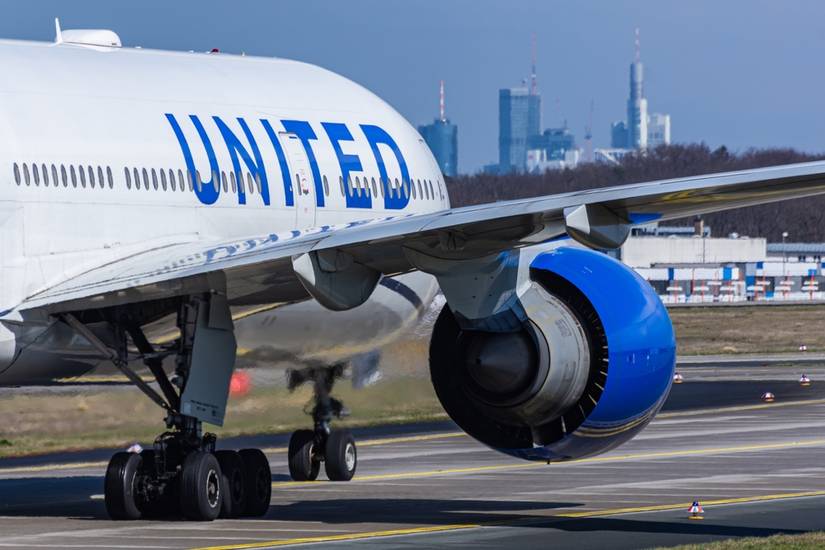
The Boeing 777 family typically consists of larger aircraft than the Boeing 787 family. The 777 fuselage is wider, enabling an economy class cabin configured ten-abreast in a 3-4-3 layout, compared to the Dreamliner’s customary nine-abreast seating arranged in a 3-3-3 configuration. However, actual passenger capacity involves considerable nuance based on specific aircraft variants and individual airline cabin configurations.
Counterintuitively in commercial aviation, a larger physical airframe does not always translate into a higher seat count. The Boeing 777-200ER is built with an interior cabin length of roughly 161 feet, providing about 144 feet of usable floor space depending on bulkhead measurements. By comparison, the Boeing 787-10 is significantly longer, boasting a total cabin length of approximately 171 feet.
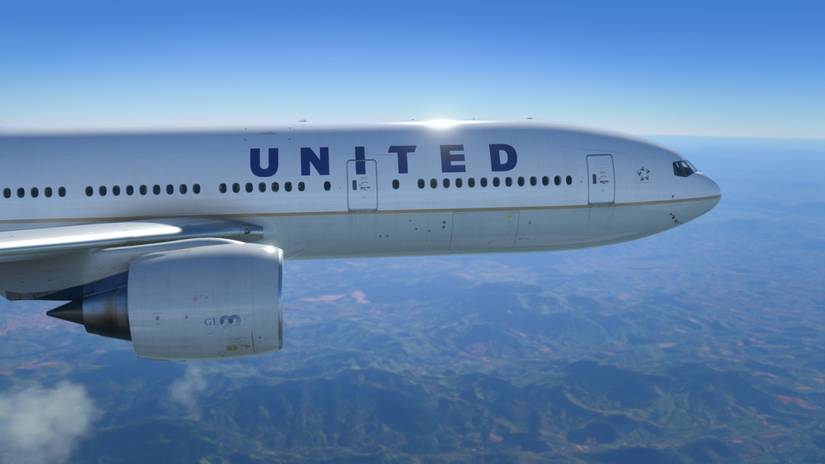
United’s Boeing 787-10 aircraft deployed on the Athens route are configured with a total of 318 seats. This layout comprises 44 Polaris business class seats, 21 premium economy seats, and 307 economy class seats, a figure that includes 54 Economy Plus seats. Meanwhile, the shorter but wider Boeing 777-200ERs deployed on the same route carry a total of 276 seats.
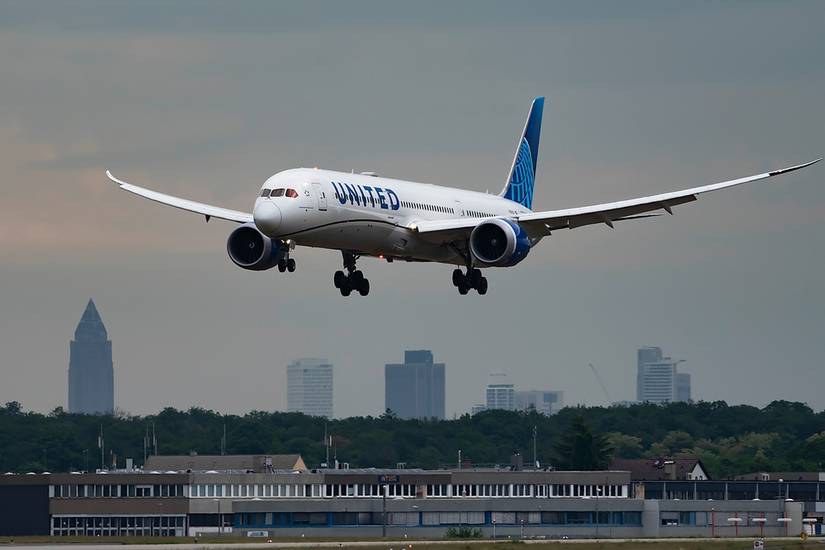
This 777-200ER configuration includes 50 business class seats, 24 premium economy seats, and 248 economy seats, of which 46 are designated as Economy Plus. While this represents a total decrease of 42 seats compared to the 787-10, it actually provides an increase of nine premium-cabin seats. Within the premium economy cabin, the 787 is configured in a 2-3-2 layout, whereas the 777 utilizes a 2-4-2 arrangement. Business class remains consistent across both types, featuring a spacious 1-2-1 direct-aisle-access layout.
United’s Boeing 767-400ER Fleet and Narrowbody Strategy
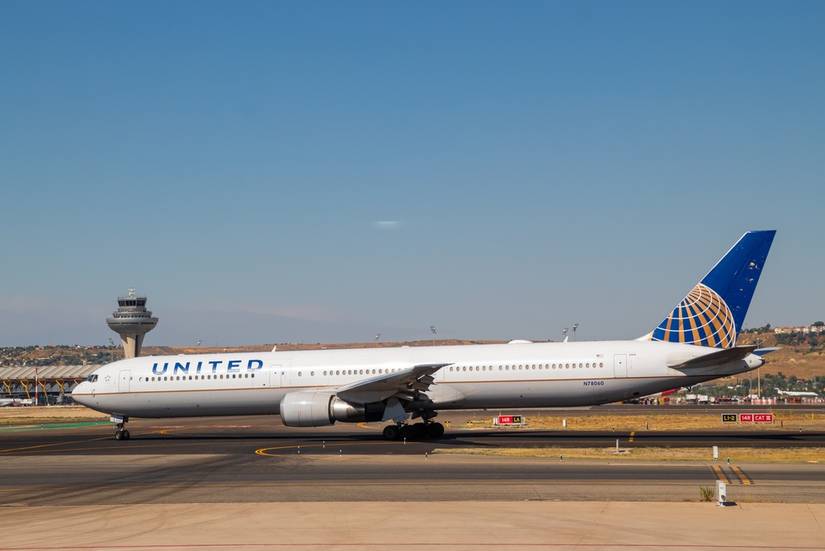
United Airlines continues to maintain and operate a dedicated fleet of 16 Boeing 767-400ER aircraft. These lower-capacity widebodies are configured with a total of 231 seats, featuring 34 business class seats, 24 premium economy seats, and 173 economy seats, including 48 Economy Plus positions. While both United and Delta Air Lines are progressively phasing down their older Boeing 767 fleets, the variants being retired first are the older Boeing 767-300ER models.
United has not yet retired any of its 767-400ER airframes, and the active fleet carries an average age of roughly 25 years. These aircraft are primarily slated for retirement between 2027 and 2030, with incoming Boeing 787 Dreamliners serving as their primary direct replacements. Boeing originally designed the Dreamliner family as a next-generation successor to the aging 767 line. However, the 767 segment is also being partially replaced by long-range narrowbody aircraft, specifically the Airbus A321XLR, for which United holds a firm order for 50 examples.
United is preparing to introduce its first Airbus A321XLR aircraft into commercial service, with initial routes targeting Western European destinations in Spain, Ireland, the Netherlands, and France. On paper, the XLR possesses sufficient range to reach cities as far from New York as Italy, though airline assessments indicate it lacks the practical range margin required for certain operational profiles. Because Greece is geographically more distant than Italy, United is expected to continue relying on widebody aircraft for its trans-Atlantic routes to Athens.
United’s 787-10 Redeployments and Range Capabilities
As part of its broader seasonal adjustments, United Airlines redeploys its Boeing 787-10 fleet to upgauge routes such as Chicago O’Hare to Milan Malpensa in Italy, a change taking effect in April to replace the smaller Boeing 787-8. The type also replaces 787-8s on the Chicago to Paris route, alongside a brief window in April where it steps in for the 787-9 on the Los Angeles to London Heathrow run.
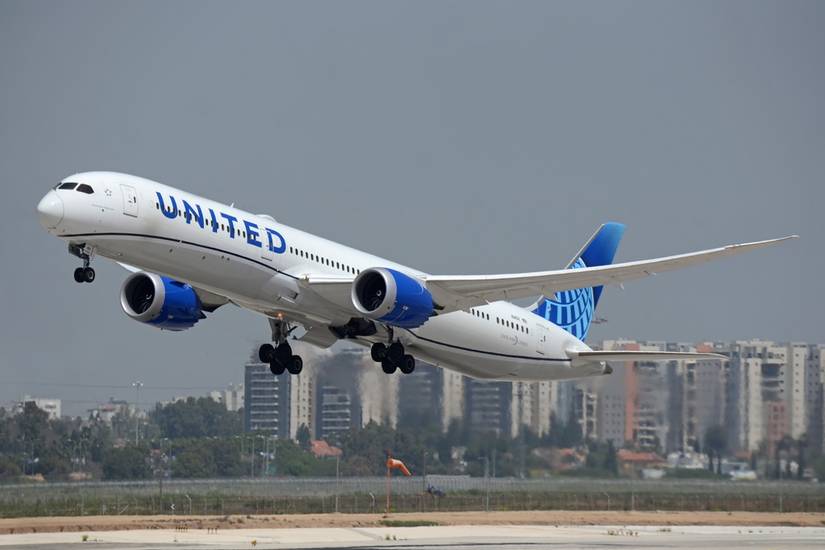
United currently operates a fleet of 21 Boeing 787-10 aircraft, with winter deployment concentrated primarily on high-demand corridors such as Newark to Milan, Newark to Tel Aviv, and Chicago to Paris. Updated performance specifications from Boeing estimate the maximum range of the Dreamliner family to be up to 8,000 nautical miles for the 787-8, up to 8,300 nautical miles for the 787-9, and up to 7,500 nautical miles for the larger 787-10 variant.
However, actual operational ranges remain highly context- and mission-dependent based on payload, winds, and routing. When the aircraft was first introduced, Boeing marketed the 787-10 with a more conservative range of 6,330 nautical miles, though ongoing technical revisions have updated these metrics. The 787-10 is typically optimized for higher-capacity medium-haul missions and lacks the extreme range required for ultra-long-haul routes, making it an ideal workhorse for transatlantic sectors, while its longer-legged sibling, the 787-9, handles ultra-long journeys like San Francisco to Christchurch.
Prioritizing Capacity Over Fuel Economy
The Boeing 787-10 and its sister variants represent some of the most fuel-efficient widebody aircraft available in commercial aviation. Boeing data suggests the 787-10 burns approximately 29% less fuel per seat than the legacy 777-200ER over a standard 5,053 nautical mile comparison, assuming 318 seats on the Dreamliner against 276 on the older twinjet.
Conversely, the Boeing 767 family has become less efficient on a fuel-burn-per-seat basis, cementing its eventual replacement timeline. Yet these mature jets offer significant financial advantages due to low capital expenses and fully depreciated asset values. Similarly, the Boeing 777-200ER lags behind modern competitors like the Airbus A350, newer 787 models, or the upcoming Boeing 777X series. While United plans to phase out its standard 777-200 models in the coming years, the ER variants are expected to remain in service longer.
The lower capital costs of older aircraft provide carriers with crucial financial flexibility when adjusting capacity without committing newer, more expensive assets to fluctuating seasonal markets. The elevated fuel burn of these mature airframes is partially offset by minimal or absent leasing costs and completed depreciation schedules.
The sequential deployment of the 777-200ER and 767-400ER to the Newark-Athens route instead of keeping the 787-10 there year-round demonstrates how United prioritizes matching capacity to seasonal demand over purely deploying its most fuel-efficient available widebody. By utilizing aircraft configurations offering 318, 276, and 231 seats, the airline fine-tunes its supply to meet actual market conditions.
United’s Transition From Ultra-Large Widebodies
Alongside Emirates, United Airlines operates one of the largest widebody fleets in the world. However, the structural composition of their respective fleets differs significantly. Emirates operates a vast global network built around a traditional hub-and-spoke model, funneling millions of connecting travelers through its central base at Dubai International Airport.
Under this operational model, Emirates heavily prioritizes ultra-large aircraft, maintaining the world’s largest fleets of Airbus A380s and Boeing 777-300ERs. The carrier has also secured substantial orders for the upcoming Boeing 777X family and expressed interest in potential stretched aircraft variants. In short, Emirates consistently acquires the largest available widebodies to support its centralized mega-hub model.
In contrast, United retired its last Boeing 747-400 aircraft in 2017 without ordering a direct replacement. The carrier also declined to purchase the Boeing 747-8 or the Airbus A380, placing only a modest order for 22 Boeing 777-300ERs. Furthermore, United has not placed orders for the delayed Boeing 777-9 series and indicated it has no interest in absorbing early-production 777-9 test frames originally slated for other international airlines.
Instead, United has prioritized network flexibility by centering its long-haul strategy around the Boeing 787 Dreamliner family. Operating roughly half a dozen major domestic hubs across the United States, United’s decentralized network model is fundamentally unsuited for ultra-large aircraft like the A380. Medium-sized widebodies offer the operational agility required to serve multiple secondary and primary international markets efficiently, a philosophy mirrored by domestic rivals American Airlines and Delta Air Lines.
Related News