Breaking Down Barriers: How National Parks Are Expanding Accessibility Through Innovative Adaptive Equipment
Article Editorial Team
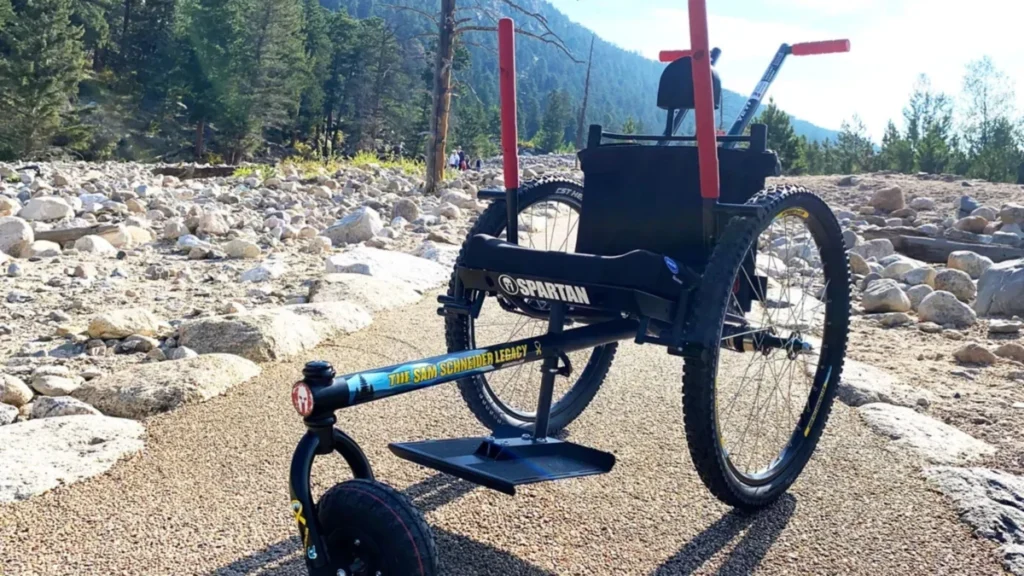
For families navigating the great outdoors with a member who has a disability, traditional hiking trails have long presented an insurmountable wall of uneven terrain, steep steps, and rocky switchbacks. But a burgeoning nationwide movement is transforming public lands, making America’s national parks increasingly accessible to visitors of all mobility levels through innovative loaner programs, community partnerships, and specialized outdoor equipment.
This shift was brought into vivid focus on an October morning at Rocky Mountain National Park. A family of five stepped onto the iconic Bear Lake Trailhead, immediately enveloped by towering evergreen trees and the glistening waters of the alpine lake. For the first few minutes, the journey followed a wide, flat dirt path framed by towering peaks. However, roughly 20 minutes into the trek, the topography shifted abruptly. The path grew steeper, punctuated by a series of wooden steps that would typically signal the end of the road for a family whose middle son uses a wheelchair.
Rather than turning back, the family pressed forward. The husband secured his footing, stepped upward, and pulled their son—who was safely seated in a Cascade Tandem Hiking Cart, an off-road adaptive cart—up the steps. A rush of adrenaline accompanied the ascent as the hiker carried the boy deeper into the wilderness, with the rest of the family quickening their pace in support. Navigating subsequent obstacles with increasing ease, the family traveled another half-mile before pausing to explore a sunlit brook. Surrounded by majestic mountain peaks, the mother experienced a profound sense of accomplishment and renewed hope, realizing that rugged nature was no longer entirely out of reach.
New Accessible Offerings at National Parks
The transformative outdoor experience was made possible by a burgeoning network of local resources and park partnerships. Weeks prior to the trip, the parents had researched purchasing a Cascade Cart to bring along on vacation. Upon contacting the manufacturer’s customer service department, they learned that a local charity, Avery’s Light, had recently donated two Cascade Carts to the Estes Park Mountain Shop, located just ten minutes outside Rocky Mountain National Park. Best of all, the equipment was available for visitors to borrow at zero cost.
After confirming the availability of the specialized hiker and securing a park entry time through Recreation.gov, the family arrived on their first morning to a thorough orientation. Rio Roman, an employee at the Estes Park Mountain Shop, spent nearly an hour instructing the family on how to assemble, operate, and disassemble the hiker. Roman also mapped out the most suitable trails for the equipment, including the heavily frequented Bear Lake Trail, ensuring a seamless and memorable excursion.
“For us, it’s about more than equipment; it’s about ensuring that nature belongs to everyone,” said Roman, who has a daughter with disabilities and frequently uses the Cascade Cart with her.
The Estes Park Mountain Shop has established itself as a vital hub for outdoor inclusion. Beyond the two specialized hikers, the establishment houses six GRIT Freedom all-terrain wheelchairs, two specialized backpacks from We Carry Kevan, and an XL bike and stroller combo from WIKE. The latter comes equipped with a complimentary electric bike rental designed specifically to pull the trailer, broadening the horizons for families seeking deeper wilderness adventures.
More Accessible Options in U.S. Parks
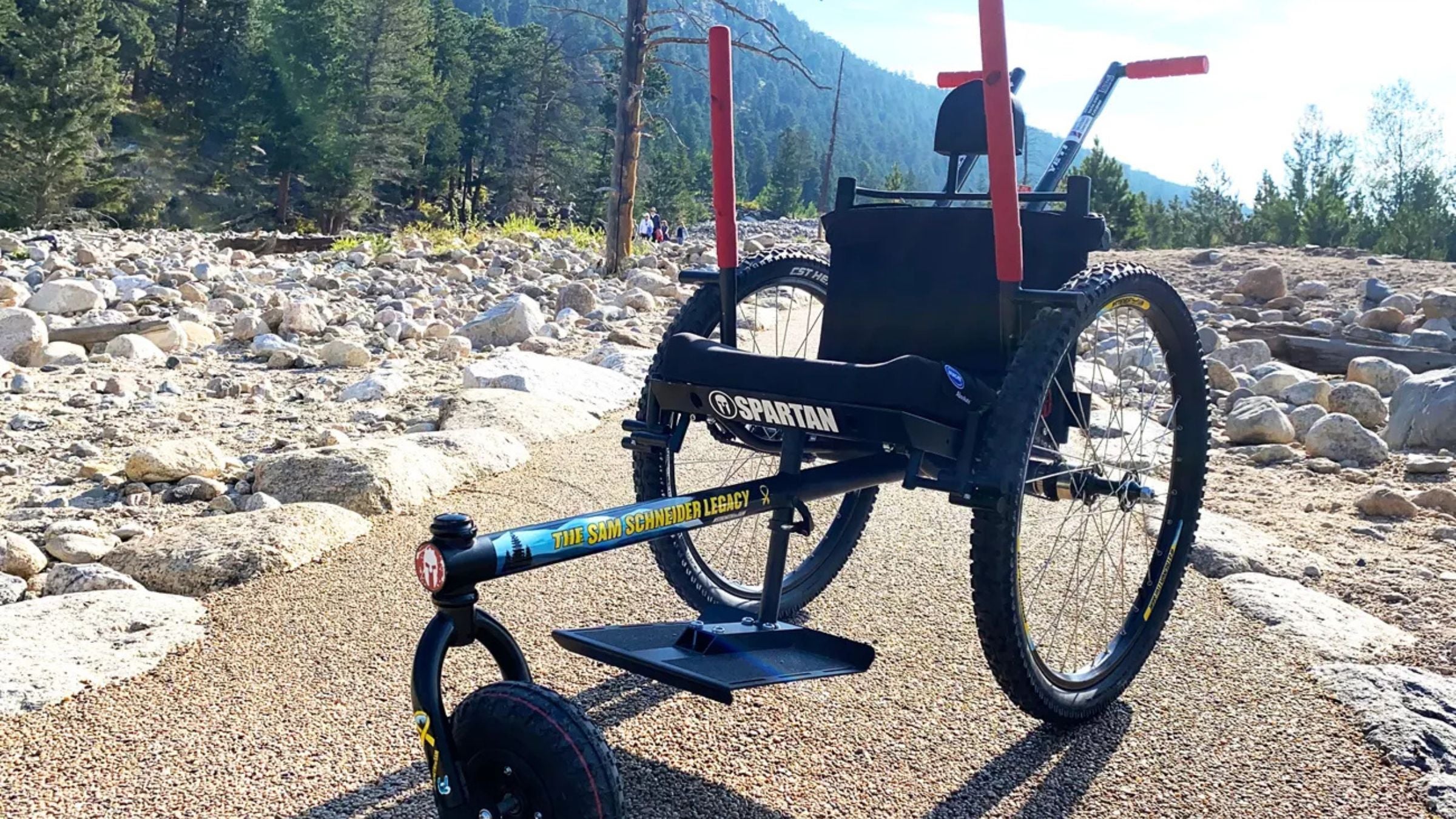
The integration of track chairs, adaptive backpacks, off-road hikers, and other mobility-enhancing devices represents a sweeping nationwide trend across the National Park Service. This fall marks a significant milestone for Utah, with all five of its national parks now offering all-terrain wheelchairs to the public. Across the United States, nearly 30 National Park Service sites now provide specialized mobility devices to visitors, operating either through direct park-run lending initiatives or via collaborative partnerships with external organizations.
At Indiana Dunes National Park, an adaptive program provides visitors with free assistive equipment, featuring two Freedom Trax—motorized off-road attachments designed for manual wheelchairs—alongside a Zoom chair and a Hippocampe Blue Blazer off-road wheelchair.
Meanwhile, the Great Smoky Mountains National Park in Tennessee launched an ambitious adaptive program featuring three designated adaptive hikes, an adaptive bike program, and a GRIT chair. The park has further expanded its inventory through partnerships with Catalyst Sports and Friends of the Smokies, integrating a Cascade Tandem Hiking Cart, a Rough Rider Aurora, and a Black Diamond TrailRider into its offerings. These devices can be utilized across approximately 14 miles of designated trails throughout the park, complemented by ranger-led programs utilizing the adaptive gear.
In Utah, Bryce Canyon National Park recently acquired two Extreme Motus Off-Road Wheelchairs. These chairs are offered on a first-come, first-served basis, allowing visitors to simply check them out by visiting the Bryce Canyon Visitor Center.
Similarly, Zion National Park introduced a public-use program making an all-terrain wheelchair available on a first-come, first-served basis. The program was made possible through a generous grant secured by the park’s official philanthropic partner, the Zion Forever Project. Visitors looking to utilize the equipment can access comprehensive information, including curated lists of recommended trails, both online and directly at the park visitor center.
“This program underscores the park’s commitment to reducing barriers and enhancing opportunities for all visitors to explore their national parks,” stated Jeff Bradybaugh, superintendent of Zion National Park.
Federal legislative efforts are also paving the way for broader structural improvements. The National Park Service is actively working to implement the EXPLORE Act, which was signed into law, designed to expand access to public lands and promote inclusive opportunities for individuals with disabilities to engage in outdoor recreation. A key emphasis of the legislation is the provision of clear, accurate trail information on official park websites, enabling visitors who rely on mobility devices to thoroughly understand trail conditions, grades, and overall accessibility before they arrive.
For families who cherish the natural world yet have historically faced physical exclusions, these systemic changes mark a fundamental shift in how public lands are experienced. The growing availability of adaptive gear is rapidly expanding bucket lists and ensuring that public lands remain open to everyone, free from the constraints that once held them back.
Related News