From Morse Code Shorthand to Modern Aviation Standard: The Fascinating History of "Roger"
Article Editorial Team
One of the most iconic aviation terms that has successfully crossed over to become a permanent fixture of everyday household vocabulary is the word "Roger." While people across the globe routinely use the term to indicate understanding or agreement, its origins are deeply rooted in the early days of military radio transmissions, the evolution of aviation technology, and the complex history of global standardization.
The story of "Roger" begins just before the outbreak of the First World War within the ranks of the US Army Signal Corps. From those early experimental radio days, the term persisted through the interwar period and was subsequently adopted by the United States Navy. The word rose to widespread public fame during the Second World War, immortalized by numerous Hollywood films depicting the intense aerial combat of the era. As military cooperation deepened between British and American forces during the conflict, the term was formally adopted by the Royal Air Force (RAF) as well.
Previously, the RAF counterpart for radio communication had been terms like "Robert" or "Robertson," which possessed a distinctly different linguistic ring. However, even widespread adoption by the RAF could not ensure the long-term survival of "Roger" within the official phonetic alphabet following the conclusion of the Second World War, as it was eventually supplanted by the word "Romeo." Despite its removal from the official phonetic alphabet, commercial and military pilots continue to use the word today, albeit not in its original phonetic context. Understanding the history and meaning of "Roger" sheds light on why it was ultimately dropped by major aviation bodies including the US Air Force, the US Navy, the RAF, and the International Civil Aviation Organization (ICAO).
The Origin Of "Roger"
In the earliest days of aviation communication, long before voice radios became standard equipment in cockpits, pilots and ground stations relied heavily on Morse Code. During this era, the single letter "R" was utilized as a standard shorthand abbreviation meaning "Received." As radios gradually began to replace Morse Code systems in aircraft, audio quality was frequently plagued by static, interference, and poor overall transmission clarity, making it remarkably easy for messages to be misheard and misunderstood. Consequently, the development of a phonetic alphabet became an absolute necessity to ensure individual letters could be clearly distinguished over noisy, crackling radio frequencies.
During this early developmental period, the phonetic alphabet pronunciation designated for the letter "R" was "Roger." As aviation communications continued to mature, this phonetic pronunciation was eventually replaced in the NATO Phonetic Alphabet—made widely popular by Hollywood aviation films—with the word "Romeo." Prior to global standardization, various organizations proposed numerous alternative phonetic pronunciations for the letter "R," including Rome, Rivoli, Roma, Robert, and Rosa. However, while the official phonetic alphabet evolved and "Roger" was formally replaced by "Romeo," the word itself remained firmly embedded in everyday aviation vernacular.
Linguistic challenges also played a significant role in early radio protocols. The simple word "yes" is a single-syllable term that could easily be mistaken for other words or lost entirely in transmission static, particularly when using the rudimentary radio equipment of the 1920s. Communicating effectively required a clear, distinct, multi-syllable word. In this practical context, "yes" was deemed unsuitable for reliable radio communication, making "Roger" the preferred method to signal that a message had been successfully received. Furthermore, aviation protocol dictates that "Roger" does not translate to "yes." Within professional aviation terminology, the correct word to signify agreement or "yes" is "affirmative."

What "Roger" Means
As established, the word "Roger" fundamentally stands for "Received." In professional radiotelephony, it communicates a very specific message: "I received and understood your last transmission." Crucially, it does not imply any intent on the part of the pilot to carry out any instructions contained within that transmission; it merely confirms comprehension. Alongside other time-honored radio terminology like the distress call "Mayday," the word remains an enduring part of aviation and maritime tradition.
Conversely, the specific word that signifies a pilot will actually execute provided instructions is "Wilco," which stands for the phrase "Will comply with your instructions." Within standard aviation phraseology, the word replacing "no" is "negative." These standardized terms are utilized by civil aviators, military personnel, spacecraft flight crews, and maritime shipping operators alike, providing the vital advantage of being completely unambiguous and universally understood across international borders.
The historical trajectory of "Roger" spans several decades of military and civilian evolution. The term was first utilized by the US Army Signal Corps in 1913, before being formally adopted into the joint US Army and US Navy phonetic alphabet in 1927. By 1941, it had been adopted across all branches of the US Armed Forces, followed by its adoption among Allied Forces, including the RAF, in 1943. When the International Civil Aviation Organization introduced its initial phonetic alphabet in 1951, known as the "Able Baker" alphabet, "Roger" was initially included. However, as international aviation sought absolute clarity and standardization across multiple languages, "Roger" was universally replaced by "Romeo" across NATO and ICAO frameworks in 1956.
Within the Royal Air Force, the combined expression "Roger Wilco" emerged to signify "Received, will cooperate," serving as a concise acknowledgment of a request or order. Meanwhile, popular culture has occasionally introduced alternative interpretations, such as a widely circulated online explanation popularized by motivational speaker and former Navy SEAL David Goggins, who suggested that "Roger" stands for "Received Order Given, Expect Results." The exact origin of this alternative acronym remains unclear within official historical records.
A Confusing Array Of Phonetic Alphabets
During the First World War, British and American military branches independently developed their own distinct phonetic alphabets, while various international maritime and telegraph organizations established entirely separate systems. The 1927 US Army and Navy Radiotelephony Alphabet utilized words such as Able, Baker, Charlie, Dog, Easy, Fox, George, How, Item, Jig, King, Love, Mike, Nan, Oboe, Peter, Queen, Roger, Sugar, Tare, Uncle, Victor, William, Yoke, and Zebra. This represented just one of many experimental and service-specific phonetic alphabets developed during that era.
These phonetic alphabets were not only prone to frequent revision, but significant discrepancies existed between systems. The US Army Signal Corps maintained a different phonetic alphabet than the Royal Air Force and the International Telecommunication Union. To address these compounding complexities, the International Telecommunication Union standardized a phonetic alphabet in 1927 specifically designed to better accommodate international communication by utilizing prominent global city names such as Amsterdam, Baltimore, Casablanca, Denmark, Edison, Florida, Gallipoli, Havana, Italia, Jerusalem, Kilogramme, Liverpool, Madagascar, New York, Oslo, Paris, Quebec, Roma, Santiago, Tripoli, Uppsala, Valencia, Washington, Xanthippe, Yokohama, and Zurich.
The sheer variety of historical phonetic words assigned to the letter "R" highlights the scale of the early coordination challenge. British services historically utilized terms such as Rush, Ross, Robert, and Robertson. The International Radiotelegraph Convention used Rivoli, while the International Telegraph Union used Roma, and the 1947 ICAO Latin America and Caribbean regional meetings briefly utilized Rosa, before the universal adoption of Romeo in 1956.
Establishing an effective global standard required looking beyond the comfort levels of native English speakers to ensure that words could also be accurately pronounced and understood by foreign speakers. Consequently, planners determined that any new spelling alphabet must feature words that functioned as live terms across the world’s primary working languages at the time, sharing similar spellings in English, French, and Spanish. These words needed to be easily pronounced and recognized by airmen of all nationalities while remaining entirely free of negative cultural associations.
Superseded By The NATO Phonetic Alphabet
In 1947, the International Civil Aviation Organization initiated a comprehensive effort to develop a single, universal phonetic alphabet that could be shared seamlessly between civil and military aviation. The primary objective was to replace the fragmented collection of existing regional alphabets, which included American "Able Baker" systems and British RAF "Ack Beer" variants. The initial ICAO alphabet was introduced in 1951, beginning with words like "Alfa, Bravo, Coca," but it quickly encountered substantial international criticism.
Following extensive testing involving more than 200,000 voice transmission trials and cross-language comprehension studies, the alphabet underwent significant revision and was finalized in 1956. This definitive version omitted "Roger" from the phonetic sequence. Shortly thereafter, NATO adopted the updated alphabet, superseding all previous regional alphabets across its member militaries for joint operational use.
This standardized communication system subsequently became the global benchmark for civil aviation, maritime operations, and military communications worldwide. Its usage is strictly regulated in air traffic control, flight crew communications, and airline operations centers, with implementation formally mandated under ICAO Annex 10 governing aeronautical telecommunications.
Additional ICAO Standardizations in Aviation
This rigorous international standardization extends well beyond the alphabet to include numbers, which are specifically pronounced to prevent auditory confusion: ZE-Ro, WUN, TOO, TREE, FOW-er, FIFE, SIX, SEV-en, AIT, and NIN-er. Furthermore, the word "thousand" is pronounced TOU-SAND, eliminating difficult "th" sounds that pose pronunciation challenges for many non-native English speakers. Similarly, the number five is explicitly pronounced as FIFE to avoid any dangerous acoustic confusion with the word "fire."

Aviation phraseology also incorporates specific operational terms such as Over, Out, Stand Down, Line Up and Wait, Correction, Say Again, Standby, and Pan-Pan. While "Mayday" serves as an internationally recognized distress call signaling grave and imminent danger requiring immediate assistance, "Pan-Pan" functions as an urgent signal denoting a serious situation that does not pose an immediate threat to life. Interestingly, while the vast majority of modern aviation terminology is rooted in English, both of these critical safety terms are derived from the French language.
"Mayday" originates from the French phrase "m’aidez," meaning "help me," and was introduced by Frederick Mockford for radiotelephony at Britain’s Croydon Airport in 1923. Similarly, "Pan-Pan" stems from the French word "panne," which translates to a mechanical breakdown or failure.
Aviation language remains subject to ongoing refinement aimed at enhancing safety. For instance, the phrase "Line Up and Wait" was formally introduced into ICAO phraseology in 2010 to replace the older, potentially ambiguous command "Position and Hold." The vital necessity of clear, unambiguous aviation communication was underscored tragically by the 1977 Tenerife airport disaster, a catastrophe involving two colliding Boeing 747 jumbo jets that resulted in 583 fatalities. Investigators partially attributed the disaster to a pilot mistakenly believing he had received formal takeoff clearance due to ambiguous radio phrasing.
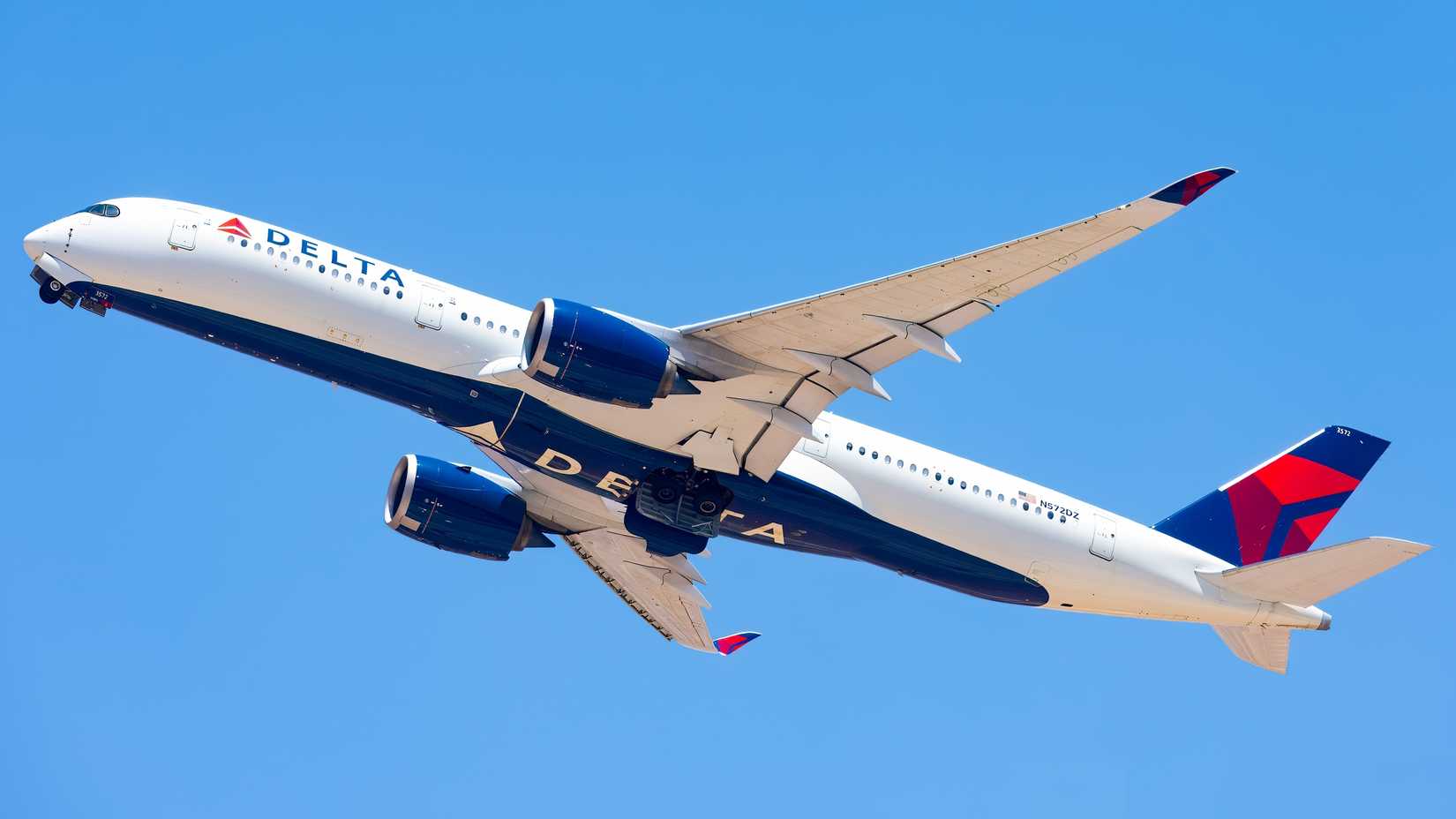
"Roger" Lasted From The First World War To The Early Cold War
Ultimately, the enduring legacy of the word "Roger" serves as a historical reminder of how drastically aviation communication protocols have evolved over the past century. The term hails from an era characterized by multiple competing, fluid phonetic alphabets used concurrently by different military branches, civilian authorities, and international allies.
The initial recorded aviation use of "Roger" to designate the letter "R" dates back to 1913 within the US Army Signal Corps. The first major step toward unification occurred in 1927 with the introduction of the joint US Army-Navy radiotelephone alphabet. Throughout the Second World War, American and Allied RAF forces eventually synchronized their phonetic alphabets, laying the essential groundwork for the modern NATO standard.
Although early Signal Corps protocols established "Roger" decades prior, and the term survived successive transitions through the 1927 joint alphabet, the wartime "Able Baker" systems, and the early ICAO frameworks, it was ultimately phased out of the phonetic alphabet in 1951 and permanently succeeded by "Romeo" in 1956. Despite its departure from official phonetic spelling tables, "Roger" remains an indelible part of global aviation culture, reflecting the rich history of radio communication in flight.
Related News