EU Green Claims Crackdown Forces Tourism Industry to Abandon Vague Sustainability Marketing
Article Editorial Team

Picture a traveler comparing two safari trips. One calls itself "eco-friendly." The other promises a solar-powered camp with no generator humming at night and a local guide who can follow a leopard by its tracks. Which one do you believe? Which one do you remember?
"Eco-friendly" has long been a staple of travel marketing, but under strict new green claims laws such as the European Union’s EmpCo Directive, that kind of vague language has transformed from a weak pitch into a serious legal risk. Across the tourism sector, travel providers are being forced to rethink how they communicate their environmental and social initiatives, shifting away from catch-all buzzwords toward transparent, verifiable storytelling.
Sustainability Buzzwords Lose Their Appeal
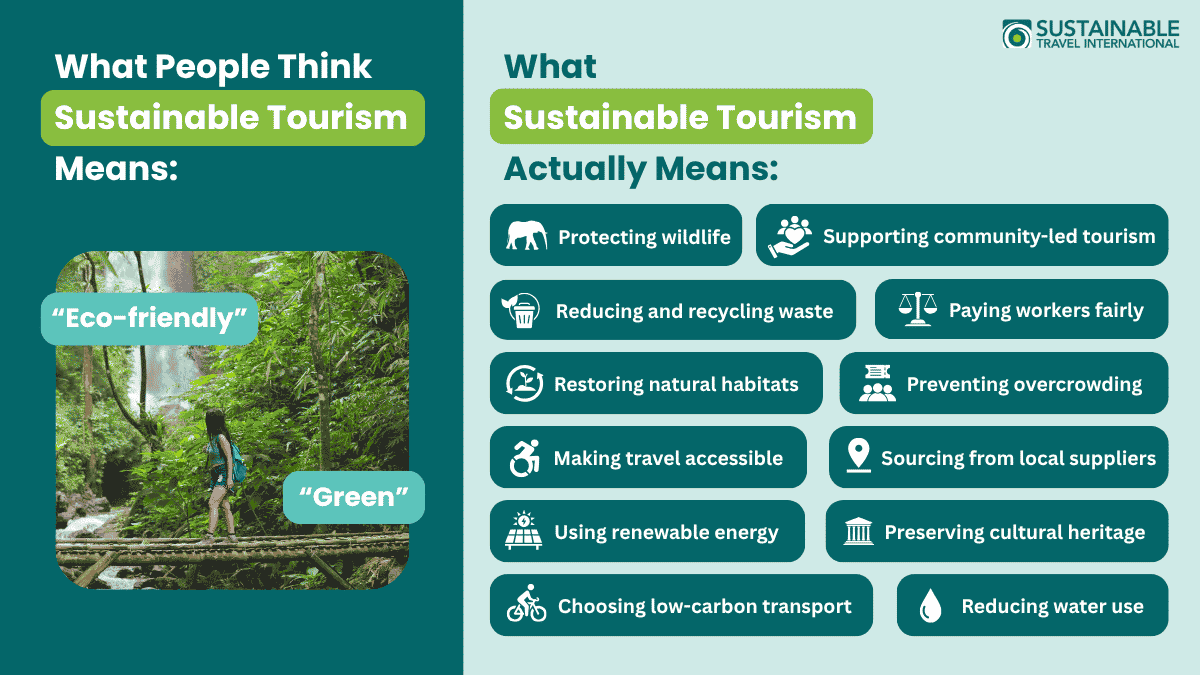
Even without the pressure of sweeping new regulatory frameworks, sustainability buzzwords like "eco-friendly," "green," and "responsible" have presented a persistent marketing problem. They make it increasingly difficult for modern travelers to trust tourism businesses or care about their underlying initiatives.
These broad terms fail to tell travelers what a business actually did, where the actions took place, or how much they helped. Without those foundational details, consumers are left wondering whether there is genuine action behind the marketing copy or merely a superficial coat of green paint.
Travelers have good reason to harbor skepticism. Research conducted by the European Commission revealed that more than half of the environmental claims examined were vague, misleading, or entirely unfounded. It comes as little surprise that many consumers no longer take these claims at face value. Although the vast majority of travelers express a strong personal interest in sustainability, recent data indicates that roughly one in four do not trust that trips labeled "sustainable" genuinely are. Consequently, relying on a vague claim not only fails to drive bookings, but it can actively damage consumer trust.
A major contributor to this skepticism is the wildly divergent ways travel providers use terms like "eco." A beachfront hotel might market itself as an eco-resort even if local mangroves were cleared during construction and untreated wastewater flows directly into the sea. Down the coast, another property might use the exact same terminology because it actively protects local mangroves and recycles its wastewater for landscaping.
The first scenario is textbook greenwashing, while the second represents genuine ecotourism. Yet, on a standard booking platform, both properties look identical: palm trees, ocean views, and a small green leaf icon next to the name. Most travelers have no way of knowing what actually happened to the coastline or where the wastewater goes. Once consumers encounter enough stories about greenwashing, many stop trusting these labels entirely, which ultimately penalizes the authentic businesses that live up to their claims.
Furthermore, terms like "eco-friendly" and "sustainable" are so expansive that they could theoretically mean almost anything, encompassing lower emissions, waste reduction, water conservation, wildlife protection, fair wages, cultural integrity, and more. Using such broad terminology implies that a business excels across every single metric, which is nearly impossible in practice. When an operation highlights a single initiative while using a catch-all label, travelers frequently scrutinize every other aspect of the trip. Naming specific efforts clearly proves far more convincing than general claims.

These terms have simply been repeated so often that they have lost their semantic weight, causing travelers to tune them out entirely. Because competitors across the globe use the exact same vocabulary in their marketing, these labels no longer help a business stand out in a crowded marketplace.
Most importantly, buzzwords bypass storytelling. Compelling narratives are what genuinely excite travelers about a trip and illustrate how sustainability enhances the overall experience. A label like "eco-friendly" cannot compete with the story of a farmer down the road whose morning harvest brings authentic regional flavors to the evening menu, or the real-world orangutan conservation project an operator supports to protect the exact habitat guests have traveled to see. Details of this nature transform sustainability from an abstract marketing label into a tangible reason to book.
Regulatory Landscape Shifts From Weak Marketing to Legal Risk
The introduction of the EU’s EmpCo Directive marks a critical turning point in the travel industry. Designed to curb rampant greenwashing, the directive establishes rigid rules governing how businesses communicate their environmental and social impacts. Applicable to any commercial entity marketing to consumers within the EU—regardless of where the enterprise is physically headquartered—the regulation has reshaped compliance standards.
Long before the implementation of EmpCo, tourism providers faced mounting legal and regulatory scrutiny over their sustainability claims. In 2024, a Dutch court ruled that advertising claims made by airline KLM were misleading because they utilized vague environmental statements to suggest that flying could somehow be sustainable. A year prior, the United Kingdom’s advertising regulator ruled against Intrepid Travel regarding its "people & planet-friendly" tagline, concluding that consumers would naturally interpret the phrase as encompassing a broader scope than the company intended. Similarly, Booking.com pulled its "Travel Sustainable" badges after a Dutch regulatory body determined that the label failed to clearly communicate what specific standards it referenced.
What the EmpCo Directive fundamentally adds to this landscape is absolute clarity. While previous legal challenges often hinged on whether a specific advertisement was judged misleading in context, EmpCo outright bans broad, unsubstantiated claims such as "eco-friendly" or "sustainable" unless a recognized certification specifically covers that exact claim. In the absence of such certification, businesses must explicitly state what actions they are taking and provide verifiable proof. Furthermore, companies are legally barred from presenting a single isolated green feature—such as providing guests with reusable water bottles—as if it renders an entire travel itinerary sustainable.
Consequently, terminology that previously represented poor marketing practice now carries profound legal risk. Recognizing this vulnerability, industry advocates and technology platforms have introduced specialized diagnostic tools, such as the Green Claims Checker, allowing travel companies to evaluate their promotional copy before publication and rewrite flagged statements.
Moving From Vague Claims to Transparent Action
The effective remedy for vague claims remains identical whether a company’s objective is improved marketing performance or strict regulatory compliance: businesses must stop treating sustainability as a marketing claim altogether. Instead, operators are encouraged to approach communications by explaining their real-world actions to a traveler who has never encountered the concept of sustainability. Marketing copy should reflect those direct answers, highlighting specific measures taken and explaining why they matter.
Robust messaging begins with verifiable facts, detailing exactly what was done, where the action occurred, and the measurable impact achieved. Incorporating real people, specific places, and local wildlife grounds the narrative in reality. This might involve introducing the local artisan who welcomes a tour group into her family home for a traditional lunch, or highlighting the specific nesting beaches where regional partners protect sea turtles.
For instance, rather than publishing a generic statement claiming to operate climate-friendly tours, a company might specify that on its Italian itineraries, 70 percent of domestic flights have been replaced with high-speed rail travel, cutting intercity transit emissions roughly in half. Travelers can easily picture this transition, verify the details, and place their trust in the brand. Furthermore, this specific approach dramatically reduces the likelihood of running afoul of regulations like the EmpCo Directive.
Bringing these operational changes to life involves illustrating what the shift means for the traveler’s actual experience. Passengers watch the scenic countryside roll past their train window rather than waiting in security lines at an airport, and they arrive directly in the heart of a city rather than at an outlying tarmac. Those experiential details are what make a trip memorable, complementing its inherent credibility.
Measurement Proves Authenticity
Quantitative data represents one of the most persuasive elements a business can integrate into its sustainability communications, converting general promises into concrete evidence. However, claims regarding emissions reductions rely entirely on baseline measurement. Establishing a clear understanding of a trip’s carbon footprint before and after operational adjustments—such as the switch from aviation to rail—provides undeniable proof of progress.
Advanced technological solutions, including AI-powered carbon footprinting platforms like Humí, have been developed specifically to address this industry need. By uploading a PDF itinerary or sharing a link to a tour page, operators can generate a comprehensive breakdown of a trip’s emissions across accommodation, transportation, activities, and meals within seconds. These insights can be shared directly with travelers via carbon labels embedded on tour pages, allowing consumers to evaluate the footprint firsthand. Once an itinerary is updated to minimize environmental impact, operators can remeasure the journey to document the exact reduction achieved.
Verification Prior to Publication
Industry experts emphasize the importance of testing sustainability messaging before it goes live to the public. By running promotional copy through specialized compliance screeners, tourism businesses can flag potentially misleading phrases and receive detailed explanations of regulatory vulnerabilities. Enterprise members within sustainable tourism networks often utilize advanced iterations of these screening tools to cross-reference their copy against specific regional regulations, such as EmpCo or California state laws, receiving targeted recommendations for compliant rewrites. This proactive approach catches risky terminology before it can be scrutinized by travelers, industry partners, or regulatory authorities.
Ultimately, broad terms like "eco-friendly" demand blind trust from consumers, whereas specific, transparent details provide a concrete foundation for credibility while clearly differentiating a travel product in the marketplace. By abandoning vague catchphrases in favor of precise reporting, measurable carbon reductions, and authentic local storytelling, travel providers can achieve both more effective marketing and absolute regulatory safety.
Related News