Reopening a 2,000-Year-Old Roman Cold Case: Was a Soldier at Velsen Murdered by His Own Comrades?
Article Editorial Team
LEIDEN, THE NETHERLANDS—Nearly half a century after the remarkable discovery of human remains and military artifacts inside an ancient well at the coastal Roman fort of Velsen in North Holland, researchers have reopened the investigation into what may have truly transpired at the frontier outpost. Originally unearthed in 1977, the skeletal remains and associated gear have recently undergone a rigorous reexamination by archaeologists Mark Driessen and Carol van Driel-Murray of Leiden University. Their renewed analysis paints a far more violent, complex, and intriguing picture of the individual’s final moments, prompting experts to reconsider whether the soldier fell victim to hostile local tribesmen during a historic rebellion or was brutally murdered from within the ranks of the Roman military itself.
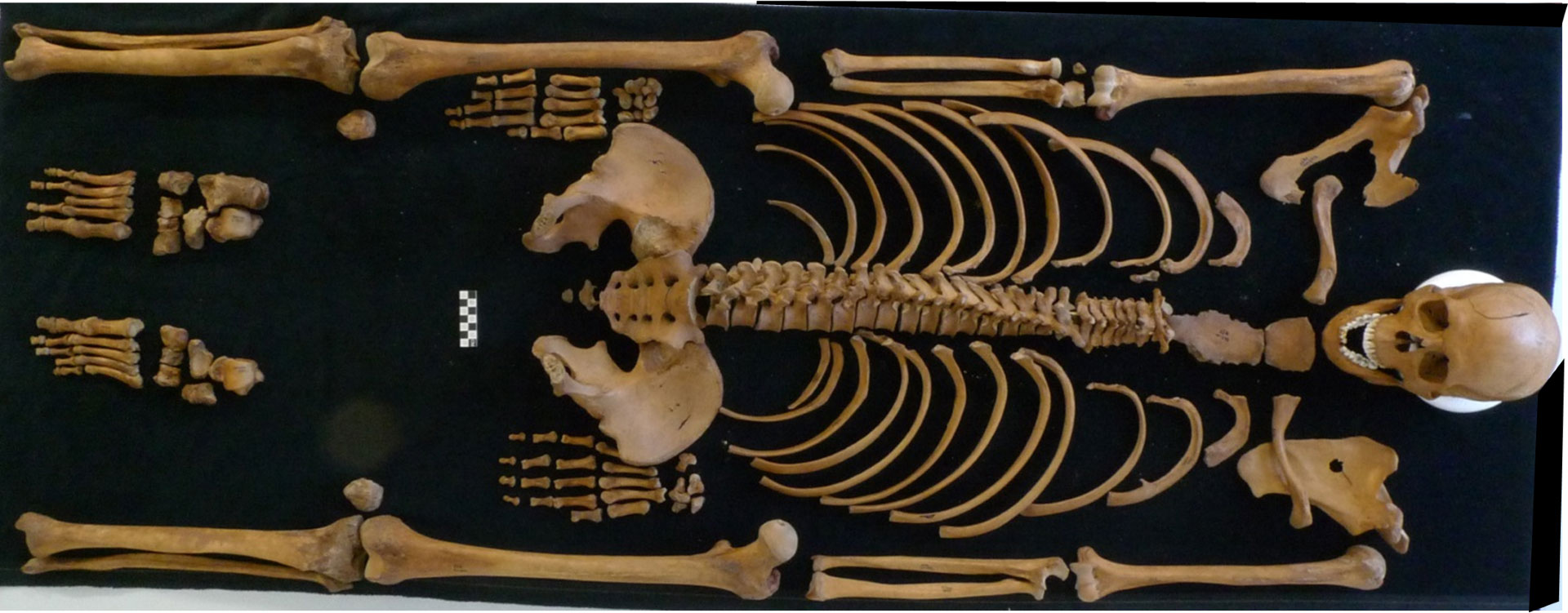
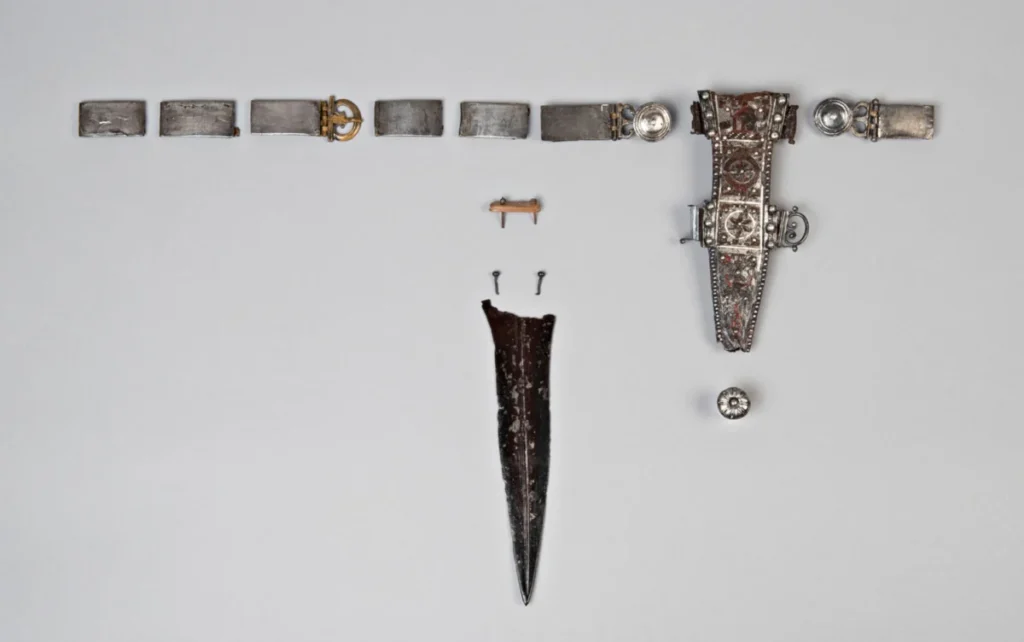
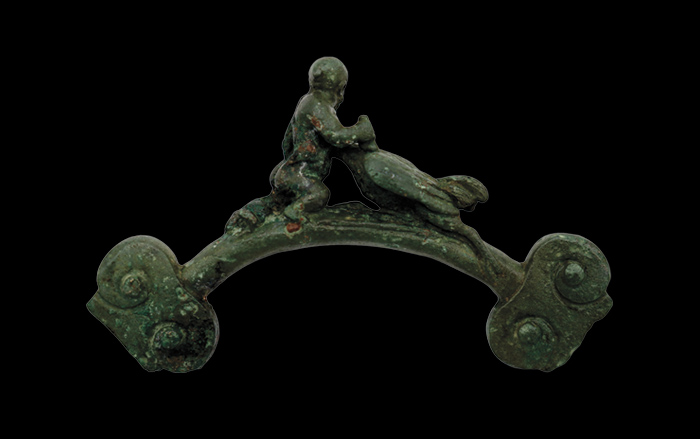
When the skeleton and its accompanying trove of personal and military possessions—including a military belt, a dagger, a ring, a fibula, and a distinctive sandal featuring a studded sole—were first recovered from the waterlogged depths of the well, initial historical frameworks pointed toward a specific, catastrophic event. Scholars previously suggested that the man met his end around A.D. 28. This timeframe aligns directly with a major uprising orchestrated by the local Frisian population, who revolted against oppressive Roman taxation and exploitation. Such a conflict is famously documented by the Roman historian Tacitus in his monumental work, the Annals, which details the volatile dynamics along the northern fringes of the expanding empire.
However, Driessen, van Driel-Murray, and their multidisciplinary research team have now gone far beyond the broad strokes of historical texts, utilizing modern archaeological science to propose several provocative alternative scenarios for the soldier’s death. Central to this reassessment is a detailed forensic examination of the skeletal remains, which revealed unmistakable evidence of severe, targeted violence. Osteological analysis identified multiple distinct stab wounds inflicted upon the man’s body, with critical trauma discovered on both the inside of the ribcage and the pelvis. These chilling anatomical details indicate that the victim was not merely killed in the chaotic melee of a battlefield skirmish, but was instead subjected to a calculated and brutal murder.
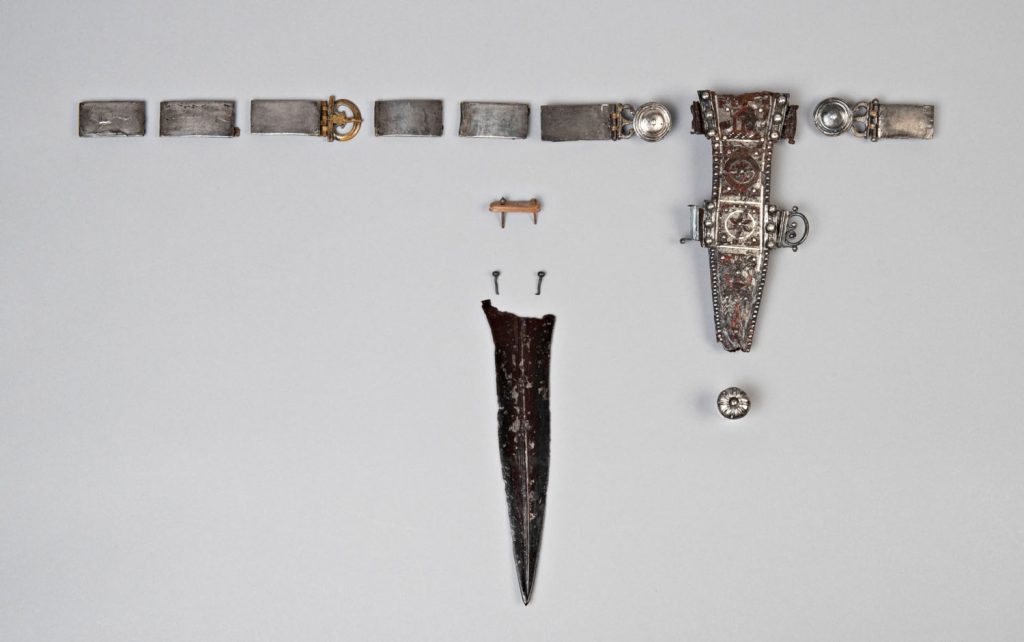
To better understand the nature of these injuries, the research team generated advanced 3D models of the bone trauma. The dimensions and characteristics of the wounds strongly suggest they were inflicted using a standard-issue Roman military dagger, known as a pugio. Remarkably, the weapon discovered directly beside the human remains in the Velsen well matches this profile precisely. The recovered pugio is a formidable weapon, boasting a nine-inch-long iron blade. Furthermore, it features an elaborate iron sheath richly decorated with silver inlay alongside vibrant red and yellow enamel, indicating that the dagger was an item of significant craftsmanship and personal value.
Additional insights into the soldier’s identity emerged from the physical measurements of his bones. Osteological data indicates that the man stood well over six feet tall—an exceptionally imposing stature for the ancient world—and possessed a heavily muscled physique. Despite his formidable physical presence, the evidence suggests he held a rank-and-file position rather than a command role. Researchers noted that his dagger showed clear signs of wear from active use, and his military belt had been assembled using mismatched pieces rather than standard, uniform components, pointing to the practical, hardscrabble life of a regular frontier legionary or auxiliary soldier.
Adding a layer of personal depth to the archaeological profile, the man wore an iron ring set with a glass-paste stone. The intricate intaglio carving on the stone depicts either the classical god Mars, the divine embodiment of war, or perhaps the legendary conqueror Alexander the Great, reflecting the cultural ideals and personal inspirations embraced by soldiers serving at the edge of the known world.
Perhaps the most surprising revelation of the renewed study involves the soldier’s geographic origins. Initial osteological assessments conducted during the 1970s tentatively hypothesized that the large man might have been of local Frisian extraction, perhaps serving as a local auxiliary or integrated native inhabitant. However, modern scientific techniques have completely overturned that early assumption. A sophisticated isotope analysis performed on the man’s tooth enamel revealed that he spent his formative childhood years far away from the marshy coast of the Netherlands, instead originating in southern Europe. This isotopic signature demonstrates that the soldier was an immigrant to the northern frontier, having traveled vast distances across the empire before meeting his violent end at Velsen.
Weighing the physical evidence alongside historical accounts, Driessen and van Driel-Murray have outlined three distinct hypotheses regarding how the soldier died. The first scenario remains aligned with the traditional historical narrative: the soldier may have been killed by indigenous Frisians during a fierce, coordinated attack on the fort, exactly as described in the historical records of Tacitus. In the chaos of an overrun frontier outpost, defenders could easily have been cornered, overpowered, and disposed of by hostile locals.
Yet, the forensic indicators of targeted, internal violence—such as the specific placement of the stab wounds—have led the researchers to introduce two deeply compelling alternatives. Given the brutal nature of the wounds, the man could have been a military deserter who was hunted down and formally executed by Roman military officials seeking to enforce strict discipline among the ranks. Alternatively, the soldier may have been murdered by his own comrades in an act of internal settling of scores, mutiny, or personal revenge, with his body subsequently concealed in the fort’s well to hide the crime.
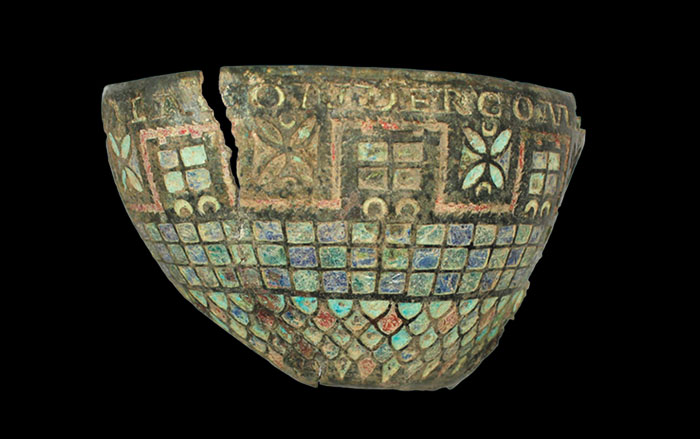
As researchers continue to analyze artifacts and skeletal collections from the northern borders of the Roman Empire, the cold case of the Velsen soldier highlights how modern forensic science can breathe new life into ancient history, transforming static museum artifacts into windows of human drama, conflict, and mystery along the ancient frontier.
Related News