Discovering Sharjah: The Cultural Heart of the Arab World Just Beyond Dubai
Article Editorial Team
Located less than 30 kilometres from the glittering, cosmopolitan sprawl of Dubai lies Sharjah, an Emirate that offers an entirely different perspective on life in the United Arab Emirates. Known widely as the Cultural Capital of the Arab World, this coastal destination preserves traditional Arabian heritage while embracing modern infrastructure, providing visitors with a unique blend of historical depth and contemporary development.

As the third-largest Emirate, Sharjah spans an area roughly half the size of Dubai. Despite its close proximity to its high-profile neighbour, arriving in Sharjah feels like stepping into a completely different era. Life here moves at a more traditional pace, anchored by magnificent Islamic architecture, extensive cultural museums, vibrant waterways, and community-focused public spaces. A five-night stay in the Emirate reveals a wealth of attractions that seamlessly merge Islamic culture with modern urban planning, offering an appealing alternative for travellers seeking a deeper historical context in the Middle East.

Navigating the Cultural Capital
For travellers planning an itinerary, Sharjah features a dense concentration of cultural landmarks. Among the defining institutions is the Sharjah Museum of Islamic Civilisation, situated in the heart of the city. Housed in a grand, highly recognizable building, the museum holds a vast collection of approximately 5,000 artifacts spanning ceramics, coins, intricate metalwork, sculptures, and traditional weaponry. These exhibits offer visitors a detailed chronological insight into the history of the region and highlight Islam’s profound historical contributions to both art and science. General entry remains accessible, with tickets priced at approximately AED 10, and operating hours extending through the weekend.

Beyond its historical museums, the city features dynamic outdoor and recreational hubs such as Al Qasba. Situated along a central canal, this waterfront community functions as a popular gathering space featuring cafes, restaurants serving both local and international cuisine, musical fountains, and indoor family areas. While the iconic 60-metre-high Eye of the Emirates Ferris wheel has since relocated to Al Montazah Parks, Al Qasba remains a prime destination for evening strolls, sunset views, and cultural events hosted within the Masrah Al Qasba auditorium, including the annual Sharjah Film Festival.

For those looking to explore traditional commerce, the Blue Souk—officially known as the Central Souk—provides an extensive indoor marketplace away from the afternoon heat. Characterized by its regal architecture adorned with traditional blue mosaic tiles, the complex houses roughly 600 individual shops. Visitors can browse an extensive array of authentic Arabic goods, ranging from handcrafted jewelry and traditional clothing to home decor, carpets, and localized crafts, making it a focal point for both active shoppers and those interested in local trade.

Exploring Heritage and Modern Art
To fully understand the historical foundation of the region, visitors frequently turn to the Sharjah Heritage Area. This medieval-style sector preserves traditional Arabic architectural designs, narrow pathways, and historic family residences. Within this district, tourists can visit specialized institutions such as the Bait Al Naboodah Museum, the Sharjah Heritage Museum—housed within a restored 18th-century pearl merchant’s home—Al Midfaa House, the Sharjah Fort, the Sharjah Calligraphy Museum, and Souk Al Arsah. Multi-venue exploration is often streamlined through a heritage joint ticket, which grants access across several of these foundational sites.

Complementing its historical preservation, Sharjah holds a prominent position in contemporary fine arts. The Sharjah Art Museum, established in 1997, stands as the largest art museum in the UAE and serves as a core pillar of the city’s cultural designation. Featuring extensive galleries dedicated to ancient, medieval, and contemporary Arabic art, the institution showcases diverse paintings and sculptures. The museum’s permanent collection is accessible to the public free of charge, allowing visitors to experience the exhibits at their own pace.

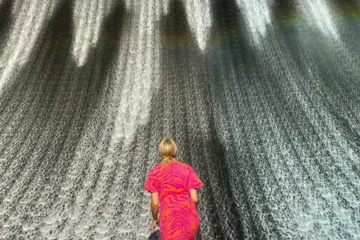
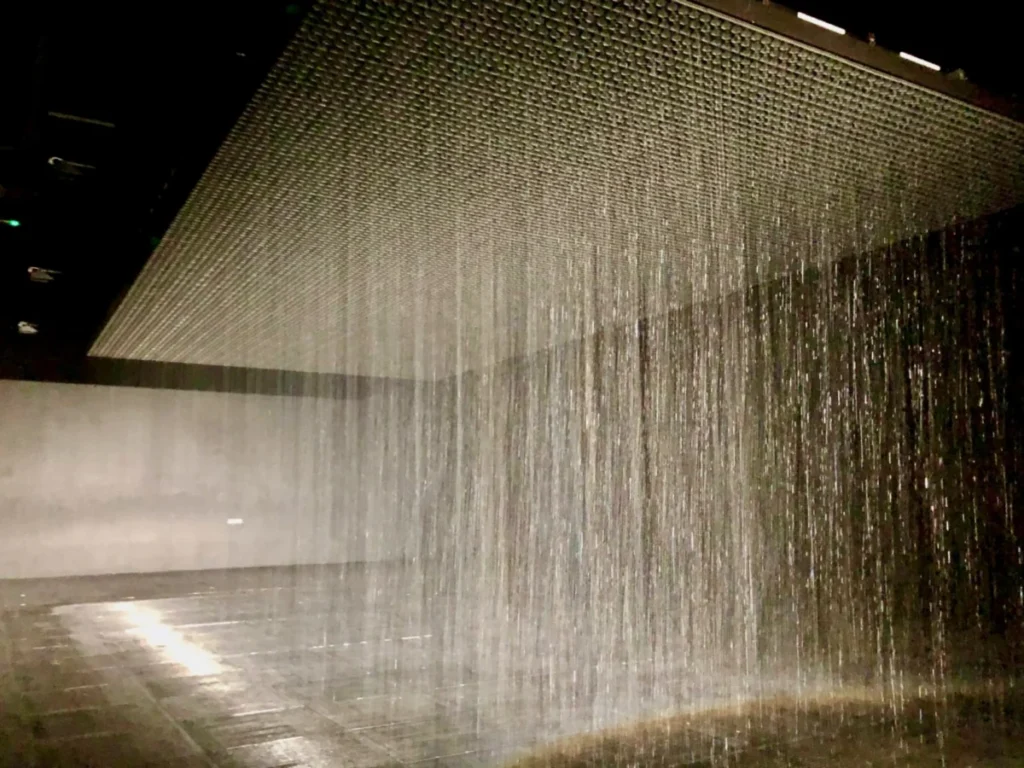
A short walk from the art museum leads to one of the city’s most innovative contemporary attractions: the Sharjah Rain Room. Originally introduced as a temporary installation, this permanent exhibit provides a surreal experience within a notoriously arid desert climate. Utilizing motion sensors, the installation allows visitors to walk through a steady downpour of indoor rain as the water pauses directly above them, enabling individuals to navigate the space without getting wet. Due to strict capacity limits per time slot, advance booking through the Sharjah Art Foundation is recommended, particularly for weekend visits.

Natural Spaces and Coastal Landscapes
Sharjah’s geographical diversity extends from urban waterfronts to protected ecological zones. The Sharjah Aquarium, situated across two floors, houses more than 100 marine species and emphasizes the preservation of local marine ecosystems affected by pollution. Admission to the aquarium conveniently includes entry to the adjacent Sharjah Maritime Museum, offering a comprehensive look at the Emirate’s coastal heritage, lagoons, and historic ports.

Further integrating nature into the urban landscape is Al Noor Island, located within the Khalid Lagoon. This serene oasis features landscaped gardens, contemporary art installations, a literary pavilion, and a specialized Butterfly House that shelters hundreds of rare butterfly species. As evening approaches, specialized lighting transforms the island into an illuminated night garden.

Along the mainland, the Al Majaz Waterfront serves as a primary recreational promenade. Overlooking the Khalid Lagoon, the pedestrian and running paths offer panoramic views of the modern skyline juxtaposed against historic mosques. The waterfront regularly hosts public concerts, festivals, and musical fountain shows, while housing the Al Majaz Amphitheatre, which features an adjacent running track. For wildlife enthusiasts, the Sharjah Desert Park, sprawling across a one-square-kilometre area, encompasses the Natural History Museum, the Islamic Botanical Museum, a children’s farm, and the Arabian Wildlife Center, which focuses on protecting endangered desert species such as the Arabian Oryx.

Practical Travel Logistics and Access
Travelling between Dubai and Sharjah is straightforward and cost-effective. Visitors based in Dubai can utilize RTA intercity buses—such as route E303 departing from Union Square—for approximately AED 12. Alternatively, the RTA marine ferry operates from Al Ghubaiba Marine Station to Sharjah’s Aquarium Marine Station, offering a 35-minute transit for around AED 15. Taxis and ride-sharing services like Uber and Careem are also readily available, though travellers should account for potential rush-hour traffic congestion.

Within Sharjah itself, the city is largely accessible on foot for those staying near the central corniche or lagoon areas. For broader transit, a hop-on, hop-off tourist bus operates a leisure route covering 13 major city landmarks, including the Al Majaz Waterfront, the aquarium, and the central museums.

Accommodation options across the Emirate range from high-end international properties to boutique coastal resorts, offering competitive value compared to neighbouring commercial hubs. Popular choices include properties along the corniche such as The Act Hotel and Marbella Resort, as well as airport-adjacent options like Centro Sharjah by Rotana.

Visitors should note that Sharjah maintains conservative cultural standards. The Emirate is legally dry, meaning alcohol is neither served nor permitted to be imported by travellers. Additionally, modest attire covering shoulders and knees is expected in public spaces. Planning visits outside of religious observances like Ramadan ensures full access to local dining establishments during daytime hours, allowing travellers to experience the full scope of Sharjah’s historical, cultural, and natural offerings.
Related News