Delta SkyMiles Reserve Card Review: Is the $650 Fee Worth It for Elite Status and Lounge Access?
Article Editorial Team
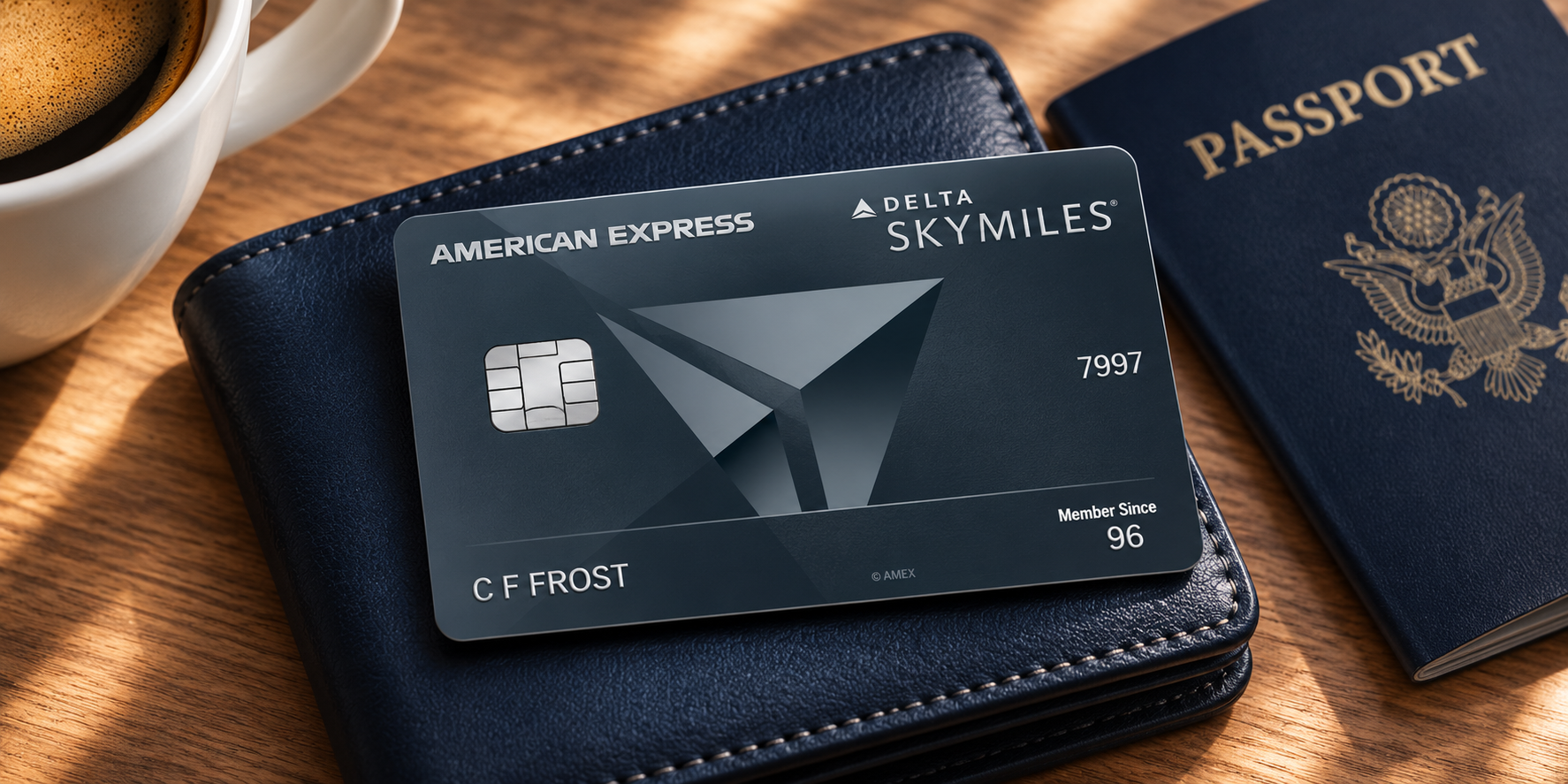
The Delta SkyMiles Reserve American Express Card sits proudly as the airline’s top-tier, flagship credit card. Carrying a hefty annual fee of $650, it is also the product that many frequent Delta flyers talk themselves into acquiring without stopping to do the proper mathematical analysis. The card is engineered first and foremost for travelers who are aggressively chasing Delta Medallion elite status, leveraging everyday card spending to rack up Medallion Qualifying Dollars (MQDs)—the dollar-based performance metric Delta utilizes to determine who ultimately earns elite status tiers.
To be fair, the card comes loaded with an array of premium perks. These include 15 visits a year to Delta Sky Club airport lounges, an annual companion certificate starting in your second year of cardmembership, a deposit of 2,500 MQDs directly into your account every year, and free checked bags on Delta-operated flights.
However, for travelers whose primary goals are simply securing free bags and a slightly elevated airport experience, a cheaper co-branded Delta card can easily cover the basics. Meanwhile, the standalone American Express Platinum Card grants entry into a far broader network of airport lounges, whether you are flying with Delta or another airline entirely.
For anyone who has been sitting on the fence, a time-sensitive welcome offer makes the decision much more pressing. New cardholders can earn two round-trip Delta Comfort flight certificates plus 50,000 bonus miles after meeting a spending requirement of $10,000 within the first six months. This marks the first time that flight certificates have ever been included as part of the Reserve card’s welcome offer.
Even so, a large initial bonus does little to alter the recurring annual fee you will pay year after year. A close examination is required to determine precisely who the Reserve card makes logical financial sense for, and who would be far better off skipping it altogether.
Chasing Elite Status with the Delta Reserve Card
If there is one definitive reason to justify paying the steep $650 annual fee for the Delta Reserve Card, it is the pursuit of Delta Medallion status. In the current travel landscape, simply flying a high volume of segments with Delta is no longer enough on its own to secure status; travelers must spend heavily as well.
Before diving into the mechanics, it is worth stating plainly that chasing airline elite status is rarely a sound financial investment for the average consumer. Most travelers are far better off operating as elite status free agents, booking whichever airline offers the cheapest fare or the most convenient schedule for a specific trip.
Nevertheless, for individuals who already log massive amounts of time on Delta aircraft—preferably on their employer’s corporate dime—status can dramatically improve the travel experience, and the Reserve card serves as the most efficient catalyst to reach those tiers.
How to Earn Medallion Status Under Delta’s Rules
After alienating segments of its most loyal customer base with sweeping and painful structural changes to elite status requirements, Delta fundamentally transformed how Medallion status is earned. Earning any level of status is now overwhelmingly determined by financial contribution to the airline, measured strictly in Medallion Qualifying Dollars (MQDs). From the lowest tier to the top, travelers must commit substantial capital to achieve recognition.
Cardmembers earn $1 MQD for every $1 spent on Delta-marketed flights. Additionally, cardholders earn $1 MQD for every $10 spent on the Delta SkyMiles Reserve Card, and $1 MQD for every $20 spent on the Delta SkyMiles Platinum Card.
To soften the blow of these rigorous spending thresholds, Delta offers an MQD headstart program across both the Reserve and Platinum personal and small business cards. Through this mechanism, the airline automatically deposits 2,500 MQDs into qualifying accounts at the beginning of each calendar year.
This means that having the Delta Reserve or Platinum card in your wallet at the start of the year yields an immediate 2,500 MQDs right out of the gate—representing half of the requirement needed to attain the entry-level Silver Medallion status. Because the Reserve card awards $1 MQD for every $10 spent, a cardholder could theoretically spend $25,000 in a calendar year to meet the entire $5,000 MQD requirement for Silver status without ever stepping foot inside an airplane.
Delta recently confirmed that these status thresholds will remain entirely unchanged, holding steady even as competing legacy carriers adjust the bars for their own top-tier programs. Any elite status earned under these rules remains valid through January 31 of the subsequent extended qualification cycle.
Because the Delta Platinum Card earns $1 MQD for every $20 spent, a cardmember would need to spend twice as much—totaling $50,000—to generate the equivalent $2,500 MQDs needed for Silver status. Consequently, holding the Reserve Card is practically a prerequisite for anyone whose primary objective is earning Delta status efficiently. Crucially, spending on lower-tier cards like the Delta SkyMiles Gold Card or the Delta Blue Card yields zero MQDs.

A lucrative shortcut exists that bypasses everyday spending entirely, as the MQD headstart benefits stack across multiple products. Holding both the Reserve card and the personal Delta Platinum card provides a starting balance of 5,000 MQDs, granting instant Silver status without spending a single dollar on Delta airfare. Incorporating the business versions of both cards scales these advantages even further, though maintaining multiple premium products incurs significant cumulative annual fees.
Is Delta Status Truly Worth the Investment?
If navigating the complexities of MQDs, status tiers, and credit card spending requirements feels overwhelming, the Delta Reserve Card is almost certainly not the right financial product for you.
Admittedly, holding Delta Medallion status offers tangible benefits. Members receive opportunities for complimentary space-available cabin upgrades, though these have grown increasingly scarce as the ranks of elite members expand and Delta successfully monetizes a larger share of its first-class inventory. Additional perks include waived baggage fees, priority airport boarding, and dedicated telephone support lines.
However, consumers must honestly evaluate whether they fly frequently enough to genuinely leverage these perks. Unless you travel multiple weeks every month for business or leisure, justifying a high annual fee card becomes difficult, particularly when it requires forgoing larger and more lucrative welcome bonuses available on general travel rewards cards.
Airport Lounge Access and Sky Club Restrictions
Beyond status-chasing, the Delta Reserve Card is frequently sought out by travelers eager to utilize the Delta Sky Club before or after their flights.
The reality of Sky Club access involves strict limitations. Cardholders are capped at 15 individual Sky Club visits each anniversary year, unless they manage to spend $75,000 on the card within a single calendar year to unlock unlimited access. For travelers not already planning to hit that high spending tier, the visit cap is a notable restriction.
The 15-visit allotment is slightly higher than what is provided by competing premium cards, and Delta counts multiple Sky Club entries occurring within a single 24-hour window as a single visit. This allows travelers to visit a lounge before departure and during a connection without burning multiple allotted passes.

The lounges themselves provide complimentary food, curated beverages, comfortable seating, and high-speed Wi-Fi. Newer lounge outposts at major hubs feature modern design touches and dedicated amenities like shower suites. Reserve cardholders also receive four guest passes annually to share access with companions, after which a standard guest fee applies.
The Reality of Complimentary Upgrades
On paper, the Reserve Card extends non-elite cardholders a taste of elite treatment through access to complimentary, space-available cabin upgrades. This benefit allows cardmembers to be considered for upgrades to Delta Comfort and Delta First class cabins, even without formal Medallion status.
In practice, however, these upgrades are exceptionally rare. The operative phrase within the benefit terms is "space-available," and Delta determines upgrade clearing orders through a strict multi-tier hierarchy where co-branded credit cardholders sit far down the priority list.
Compounding this issue is Delta’s aggressive commercial strategy. A decade ago, the airline sold a small fraction of its first-class inventory, leaving the remaining seats open for complimentary elite upgrades. Current airline executives note that Delta now sells roughly 88% of its first-class seats outright to paying customers, leaving a mere 12% of the cabin available for upgrades. Even top-tier Diamond Medallion members holding a Reserve card can no longer reliably count on clearing complimentary upgrades.
Why the American Express Platinum Card Might Be a Better Fit
Many travelers who automatically gravitate toward the Delta Reserve Card would ultimately be better served by a non-airline-specific alternative: The Platinum Card from American Express.
While the Amex Platinum carries a higher annual fee than the Reserve card, it unlocks a vastly superior global lounge network. Platinum cardholders gain entry to Amex Centurion Lounges, Priority Pass Select networks, Plaza Premium locations, and Escape Lounges, totaling more than 1,500 lounges worldwide. It also includes access to Delta Sky Clubs when flying on a same-day Delta ticket, capped at a specified visit limit.
Furthermore, the Amex Platinum earns flexible Membership Rewards points rather than locked-in SkyMiles. Cardholders earn 5x points on flights booked directly with airlines and can transfer those balances to Delta or any of dozens of other airline and hotel loyalty programs. This flexibility often yields significantly higher overall value for travelers who prefer not to lock themselves into a single carrier ecosystem.
Related News