On the Edge of the Pacific: Climate Change and the Future of the Black Oystercatcher
Article Editorial Team
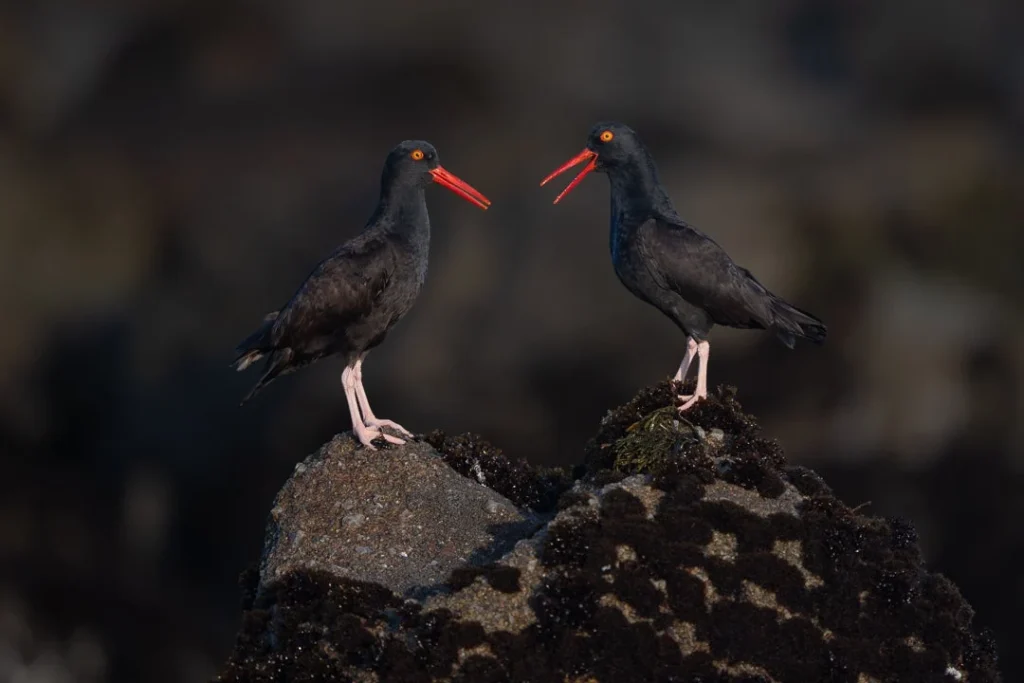
Along the rugged Pacific coastline, stretching from the icy reaches of Alaska down to the sun-drenched shores of Baja California, a specialized sentinel of the tide lives its life in a precarious, narrow strip of land. The Black Oystercatcher, an unmistakable bird with its jet-black plumage, brilliant yellow eyes, and bright, chisel-like orange bill, is an icon of the rocky intertidal zone. Yet, this species faces an increasingly uncertain future. With a total global population estimated at a mere 12,000 to 17,000 individuals, the bird’s existence is tethered to a habitat that is currently under siege by a changing climate.
The Black Oystercatcher’s life cycle is entirely dependent on the "rocky intertidal" habitat—the sliver of shoreline that is exposed at low tide and submerged at high tide. It is here that they forage for their primary food sources: limpets, mussels, and small crabs. It is also here, on these exposed rocky outcrops, that they nest and roost. Because this habitat is inherently narrow and fixed against the rising tides, the species is uniquely vulnerable to the dual threats of rising sea levels and the increasing frequency of intense, destructive storms. As these environmental pressures mount, the delicate balance between the bird and its coastal home is being tested like never before.
To understand the scope of these challenges, we turn to the expertise of Dan Orr, Director of Geospatial Science at Audubon California. Orr recently contributed to the Central Coast Regional Report, a critical component of California’s Fifth Climate Change Assessment. His work focuses on mapping and analyzing how shifting coastal dynamics intersect with avian populations. According to Orr, the changing coast is not merely a geographic inconvenience for these birds; it is a fundamental shift in the survival landscape.
The Nutritional Impact of a Warming Ocean
The relationship between the Black Oystercatcher and its environment is dictated by the availability of prey. Climate change is disrupting the marine food web in ways that cascade directly to the birds. Marine heatwaves, which have become more frequent and prolonged in recent years, can significantly deplete the food supply during the critical nesting season. When adult oystercatchers are working to fuel their own energy needs while simultaneously provisioning their chicks, a drop in available shellfish can be catastrophic.
Beyond heatwaves, ocean acidification presents a subtle but profound threat. As the ocean absorbs increased levels of carbon dioxide, the water chemistry changes, making it difficult for calcifying organisms like mussels and limpets to build and maintain their shells. Because these shellfish form the core of the Black Oystercatcher’s diet, a decline in their health or abundance—particularly among vulnerable larvae—could lead to a long-term reduction in the nutritional resources the birds require. If the shellfish population declines or shifts in distribution, the birds may be forced to look elsewhere.
While some might assume that a highly mobile species like a bird could easily adapt by finding new feeding grounds, the reality is far more complex. The Black Oystercatcher is a site-faithful species, deeply attached to its specific territory. If parents are forced to spend more time searching for food in unfamiliar areas, it forces a trade-off: they must leave their nests or chicks unattended for longer durations. This leaves the vulnerable offspring exposed to predators, effectively turning a localized food shortage into a survival crisis for the next generation.
The Role of Community Science in Conservation
As the environmental stakes rise, the role of community science has become a cornerstone of conservation strategy. Platforms like eBird and iNaturalist have transformed how researchers track species distribution and behavior. By harnessing the eyes and ears of thousands of volunteers, scientists can gain a clearer picture of how Black Oystercatchers are reacting to environmental stress over time.
However, researchers note that the value of this data depends on the quality of the observations. It is not enough to simply log sightings of the birds; it is equally vital for volunteers to keep track of visits where no Black Oystercatchers are found. By submitting a complete checklist, volunteers provide "negative data," which allows scientists to distinguish between areas where the birds are absent and areas that simply haven’t been surveyed. This comprehensive approach is essential for detecting changes in the birds’ range and habitat use.
These observations have already begun to reveal intriguing behavioral shifts. In recent years, researchers have documented Black Oystercatchers beginning to utilize alternative nesting areas, such as human-made piers and jetties, potentially as a response to the loss of natural rocky habitats. This data is actionable. When observations confirm that birds are using specific areas to forage or nest during critical times, coastal managers can implement protective measures, such as temporary roped-off areas, to minimize human disturbance and give the birds the space they need to survive. Audubon chapters across the coast have already begun integrating these practices, proving that small-scale local interventions can have meaningful impacts on species success.
Scaling Up: Insights from Multi-Regional Studies
The power of collective observation was recently demonstrated in an Audubon-led study that synthesized a decade of nest monitoring data across California and Oregon. By aggregating observations from many different coastal regions, researchers were able to identify patterns that would have remained invisible if the study had been limited to a single site. The data revealed, for instance, that Black Oystercatchers were experiencing higher nesting success in more northern latitudes, a finding that provides critical insight into how climate-driven shifts are affecting population viability.
This work was made possible through a wide network of community scientists. Volunteers from the Mendocino Coast Audubon, Madrone Audubon, Golden Gate Bird Alliance, Marin Audubon, and Monterey Audubon, along with California State Parks volunteers in San Luis Obispo County and participants from the Bird Alliance and Oregon-based Audubon chapters, were instrumental in collecting the data. This level of collaboration does more than just produce a scientific study; it creates a bridge between the public and the scientific community.
During the course of these surveys, volunteers often serve as ambassadors for the species. By introducing coastal visitors to the Black Oystercatcher and explaining the importance of the rocky shores they inhabit, these volunteers help build broader public support for conservation. These interactions foster a sense of shared responsibility, turning a casual day at the beach into an opportunity for community education and climate resilience.
Opportunities for Continued Involvement
As we look toward the future, the work of monitoring continues to be vital. The upcoming holiday season offers a prime opportunity for interested individuals to contribute to this legacy of conservation. From December 14, 2026, to January 5, 2027, the annual Christmas Bird Count (CBC) will take place across the Americas. This long-standing tradition is one of the most effective ways for birders of all skill levels to contribute to a century-long record of avian population data.
For those interested in supporting the Black Oystercatcher, participating in a coastal count is a meaningful way to get involved. Audubon provides a "CBC Circle Finder" on its website, which allows participants to locate coastal survey areas and connect with local circle leaders. These leaders provide guidance and support, often pairing first-timers with experienced birders to ensure that the data collected is accurate and useful for scientific research.
Whether through the intensive data collection of a multi-year study or the single-day snapshots provided by the Christmas Bird Count, the survival of the Black Oystercatcher remains a shared endeavor. As the Pacific coast continues to transform under the influence of a changing climate, the vigilance of volunteers and the application of scientific rigor will remain the best tools available to ensure that this iconic bird of the rocky shore continues to thrive.
Related News