Bridging Science and Community: How the Salton Sea Leadership Program is Shaping the Next Generation of Conservationists
Article Editorial Team
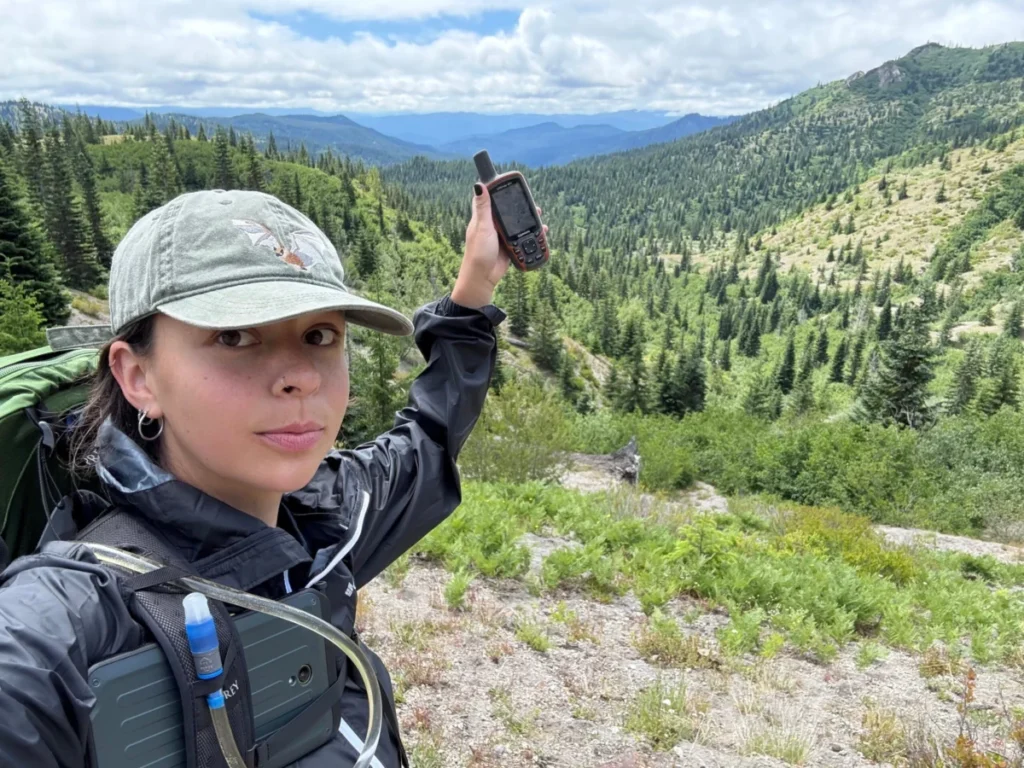
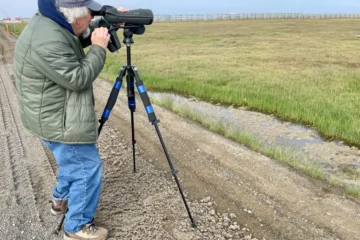
Under the relentless glare of an October sun, the desert floor begins to heat up long before the clock strikes eight. By 7:00 a.m., temperatures had already climbed to 90 degrees as biologist Kevin Manajerro and researcher Melanie Davis methodically loaded their truck with essential field gear. Their destination: a remote survey site overlooking the vast, shimmering expanse of the Salton Sea. As they reached the site, the landscape opened up into a rugged, awe-inspiring vista, flanked by the Orocopia Mountains to the east and the Santa Rosa Mountains to the west.
This morning’s mission involved traversing six specific transects—pre-determined routes used to systematically survey the desert floor. The objective was the Flat-tailed Horned Lizard (Phrynosoma mcallii), a small, elusive reptile that has evolved remarkable camouflage adaptations to minimize its shadow and blend seamlessly into the sandy terrain. After hours of careful observation, the team spotted a specimen. For Manajerro, the discovery was a milestone; it was the first time the lizard had been documented at this particular site since he began conducting surveys there. It was a fleeting moment of triumph, a testament to the patient, often grueling nature of biological fieldwork. Between the transects, I sat down with Manajerro to understand how he had transitioned from a local resident to a practitioner of such specialized biological work.
Manajerro is a 2026 alumnus of the Salton Sea Leadership Program (SSLP), and Davis, his colleague on this survey, was one of the program’s esteemed guest speakers. As the organization prepares for the 2027 cohort, I spent three days shadowing three different alumni to better understand how this program serves as a gateway to professional conservation.
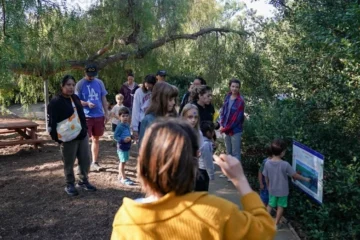
The Salton Sea Leadership Program is designed to bridge the gap between academic theory and on-the-ground environmental action. Each year, a cohort of 10 local residents is selected for a four-month intensive curriculum. Participants gain direct exposure to environmental topics through the eyes of researchers, engineers, and representatives from environmental organizations operating within the Coachella and Imperial Valleys. These regions are critical ecosystems where the needs of wildlife, native plants, and human populations intersect, often in complex and competing ways.
For Manajerro, the SSLP was the catalyst for a shift in his professional trajectory. He is currently earning college credit through the College of the Desert’s Work Experience Program, an opportunity facilitated by his involvement with the University of California, Riverside’s (UCR) Center for Conservation Biology. Reflecting on his journey, Manajerro noted that his entry into the field was not a straight line. "I met Dr. Lynn Sweet through my work at REI, but previously I met Melanie Davis through the Salton Sea Leadership Program," he explained.
The program is far more than a simple lecture series; it functions as an educational internship that demystifies the world of professional conservation. By connecting participants with the people actually doing the work, the SSLP breaks down the barrier to entry for those without traditional science backgrounds. Melanie Davis, for instance, uses her annual presentation on the endemic Salvia greata—the Orocopia Sage—to show participants that conservation is a broad field requiring a variety of skill sets. Since graduating, Manajerro has become a lab assistant in Dr. Sweet’s lab, assisting with wildlife surveys at sites like the Coachella Valley Wildlife Refuge, proving that local passion, when paired with the right mentorship, can lead to meaningful career shifts.
The success of the program is mirrored in the career trajectories of other alumni, such as Amanda Bautista, a 2025 graduate. Bautista arrived at the SSLP with a pre-existing passion for ornithology, having spent significant time volunteering on Audubon bird surveys. During her time in the program, she produced the first Salton Sea bird guide as her capstone project, an achievement that bolstered her resume for future research roles. She later joined the Pacific Northwest Research Station, where she conducted telemetry surveys for woodpeckers to map their nesting habitats and participated in the trapping and study of small mammals, including flying squirrels.
A core component of the SSLP is its commitment to continued engagement, offering alumni support through community outings and job search assistance long after the formal program ends. This network proved instrumental for Bautista, who was hired as a seasonal survey technician for the University of Idaho’s Yuma Ridgway’s Rail research project at the Sonny Bono Salton Sea National Wildlife Refuge. Her work there involved recording precise morphological measurements and collecting samples to monitor selenium levels in the rails—a critical metric for the health of the species.
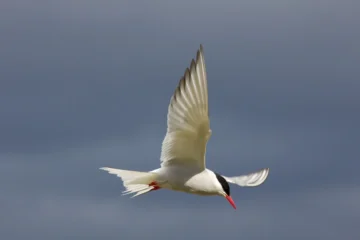
Recalling her fieldwork in Arizona, Bautista noted the stark sensory differences between locations. "In Arizona, the bird sounds were really quiet; I can hear the Rails splashing in the water. At the Salton Sea, it’s so loud with all the birds and biodiversity," she said. Her observation underscores a central tenet of the Leadership Program: the Salton Sea is a biological powerhouse. Designated as an Important Bird Area (IBA), the sea serves as a vital stopover for more than 300 species of birds migrating along the Pacific Flyway, making it a classroom like no other.
For Bautista, the SSLP provided more than just technical training; it provided a sense of belonging. When asked what the program meant to her, she described it as a "family." As a woman working in a field historically dominated by different demographics, she found the program to be a safe, supportive space. "It gave me a safe place to be a part of, and now it has become a big part of my life," she said. "I can count on my SSLP people to make me feel better about being in the same field." Today, Bautista works as an environmental biologist for a consulting firm, where she performs crucial compliance surveys for reptiles, birds, and small mammals to ensure that regional construction projects meet environmental standards.
The program’s reach extends into the realm of community organizing as well. While traveling with a group of alumni searching for rare birds displaced by a recent storm, I spoke with Ciara Taylor, another 2025 graduate. If Manajerro and Bautista represent the research and consulting side of the program, Taylor represents the community-building aspect. I first encountered Taylor at the Salton Sea Bird Festival in January 2025, though I realized later I had unknowingly attended a lecture she had been at months earlier. During her time in the SSLP, Taylor acted as a "cohort rallier," a natural leader who helped facilitate field trips and provided emotional support to her peers.
Taylor has since become a prominent figure in the local outdoor scene. Alongside her partner in nature, Judy Gill, she runs "PS Take a Hike," a hiking club that has blossomed into a larger community-driven movement to encourage residents to explore local trails. For Taylor, the SSLP was a "stepping stone to access the community and learn about things that are completely out of my wheelhouse." Despite not having a traditional science background, she utilized her skills in design to create an interactive capstone project that approached conservation through a design-thinking lens. She sought to understand how different backgrounds could be leveraged to solve complex environmental issues and create broader public awareness.
This community focus is culminating in the first annual "Take a Hike Fest," scheduled for November 14th at Francis Stevens Park in Palm Springs. The event is a free celebration of hiking culture, healthy living, and conservation, designed to unify various nonprofits, including Audubon, with local outdoor organizations. Taylor is curating a full week of on-trail programming to accompany the festival, aiming to foster a deeper connection between the public and the natural spaces of the Coachella Valley.
The achievements of Manajerro, Bautista, and Taylor are part of a larger success story. In the two years since its inception, 22 alumni have utilized the program to expand their professional portfolios. Their contributions are diverse: some lead Spanish-language bird walks to broaden the accessibility of nature, others are developing Indigenous-led programming, and some have become coastal stewards through the UC Cal Naturalist program or transferred to universities to pursue formal biology degrees. A group of alumni even traveled to the State Capitol recently to advocate for the protection of the Salton Sea and the migratory birds that depend on it.
As the Salton Sea Leadership Program prepares to launch its 2027 cohort, the application window is set to open in November. It remains an invitation to any local resident who wishes to build a community, network with established science professionals, and gain a deeper understanding of the vital work being done by Audubon California to protect one of the most unique ecosystems in the United States. For those interested in the future of the Salton Sea, the program offers a tangible way to move from being an observer to a participant in the work that defines the landscape.
Related News