Reclaiming the Shoreline: Bridging the Nature Gap Through Community and Conservation
Article Editorial Team
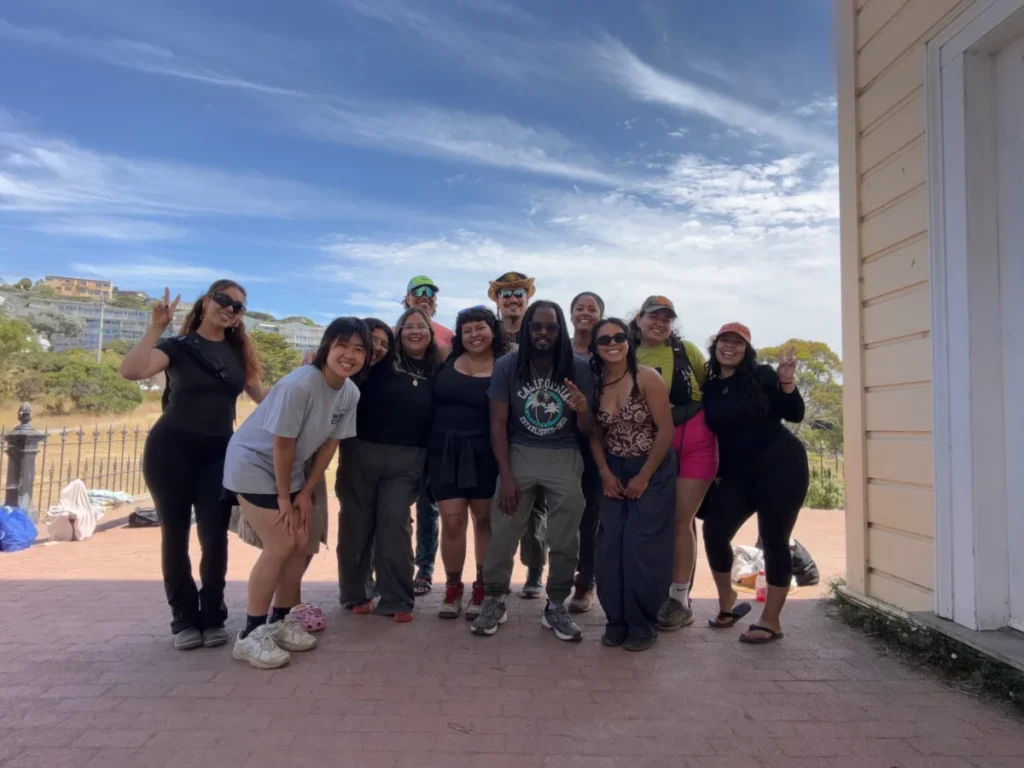
The conditions on the red brick patio of the Richardson Bay Audubon Center’s historic Lyford House were, by any measure, ideal. A temperate breeze brushed against a group of familiar faces—colleagues from my previous tenure at Urban Tilth—as we gathered under a sky that was bright with sun and punctuated by a few drifting clouds. Urban Tilth, a Richmond, California-based nonprofit, has long dedicated itself to the pursuit of a more just food system, embedding itself deep within the local community to champion urban agriculture. As I stood among them, preparing to lead a day of birdwatching, kayaking, and an exploration of the bay’s vital eelgrass beds, the atmosphere was one of anticipation. This gathering was more than a simple excursion; it was a deliberate effort to weave together the threads of conservation, environmental justice, and personal connection to the land.
Urban Tilth’s mission is centered on a fundamental objective: reconnecting Black and Brown communities with nature and the land in Richmond and across Contra Costa County. The necessity of this work is rooted in a stark reality of modern American life. Data consistently shows that people of color spend disproportionately less time in natural environments compared to their White counterparts. Furthermore, they are three times as likely to reside in neighborhoods where green space is limited or entirely absent. While Urban Tilth originated from a need to help residents reclaim agency over their food supply through urban farming, the organization has evolved significantly. Today, its reach extends into robust environmental education and watershed restoration, reflecting a holistic commitment to land stewardship. Through educational workshops that range from the practicalities of creating organic soil amendments to deep dives into local ecology, the organization continues to empower the community to view themselves not as observers, but as active participants in their local landscape.
As the sun cast a brilliant, crystal-blue shimmer across the waters of Richardson Bay, I took a moment to ground our group in the history of the space. I recounted the story of Rose “Rosie” Rodrigues da Fonta, the woman whose stewardship of this land in the mid-20th century eventually led to its preservation under the Audubon Society. The history of the Lyford House itself—a structure that was literally placed on a barge and transported across the water from its original site in neighboring Strawberry to its current perch in Tiburon—seemed to captivate the group. Watching my former colleagues’ faces as they absorbed the story of this floating legacy, it became clear that understanding the history of a place is a crucial first step in feeling a sense of belonging within it.
Our excursion began in earnest on the Center’s half-mile Nature Trail. The path meanders through a landscape defined by coast live oak woodlands and sprawling intertidal mudflats, leading us eventually to "Back Beach." From this vantage point, looking toward the distant silhouette of Strawberry and the man-made expanse of Aramburu Island, the ecological importance of the site was undeniable. Aramburu Island, once a product of 1960s dredge spoils and construction fill, has been transformed through careful restoration into a thriving wetland habitat. It now serves as a critical sanctuary for a variety of shorebirds.
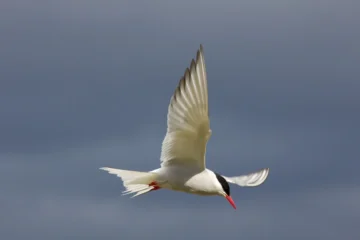
As we scanned the horizon, we were treated to a display of local wildlife in action. Double-crested cormorants and brown pelicans glided effortlessly just above the waterline, while Caspian terns patrolled the air, diving with precision to break the surface of the water like torpedoes. One of the Urban Tilth staff members noted that the Caspian tern had become his favorite species. He recalled a workshop led by a visiting biologist who had described these birds as the “Ferraris of the avian world”—a fitting moniker for their sleek, high-performance builds.
The transition from land to water brought the issue of accessibility into sharp focus. As we prepared to launch our kayaks, I surveyed the group, asking who among them had prior experience on the water. Roughly half the group raised their hands. Those who were comfortable with the paddles credited their experience to Rich City Rays, another Richmond-based nonprofit. Rich City Rays is committed to breaking down the barriers to outdoor recreation, specifically focusing on kayaking for populations that have been historically excluded from such activities. Luna Angulo, the founder of Rich City Rays, has frequently spoken about the organization’s philosophy: by putting Black and Brown people, and particularly youth, on the water, they are helping these individuals reclaim their fundamental right to a meaningful, firsthand relationship with the land and the water.
This effort to bridge the nature gap is mirrored at the institutional level by groups like Audubon California. The organization has taken active steps to codify and expand equitable access to the outdoors. This past year, Audubon California served as a co-sponsor for a bill introduced by Senator Lena Gonzalez, which successfully passed in September. The legislation codifies Governor Gavin Newsom’s “Outdoors for All” initiative, a policy framework designed to systematically improve public access to parks and open spaces for all Californians, regardless of their zip code or background.
Beyond legislative advocacy, the organization is implementing this vision on the ground. At the Audubon Center at Debs Park in Los Angeles, volunteer habitat restoration events serve as a primary vehicle for engagement, inviting the local, predominantly Latinx community to take a hands-on role in the health of their regional ecosystem. Similarly, staff at the Salton Sea have collaborated with the residents of Bombay Beach to develop and enhance public access points as part of the Bombay Beach Wetland Enhancement Project.
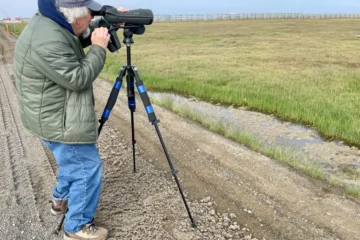
At the Richardson Bay Audubon Center itself, this commitment to outreach is a daily practice. In May, for instance, I had the privilege of working alongside a fellow Community Conservation Fellow to host an event in partnership with WildCare, a nature education and wildlife rehabilitation center based in San Rafael. During that program, we engaged families from San Rafael’s predominantly Latinx Canal District, introducing them to the bird species of the Sanctuary and teaching them the mechanics of birdwatching using professional spotting scopes and binoculars. These moments of discovery—when a child or an adult sees a bird clearly for the first time through a lens—are the building blocks of a more inclusive conservation movement.
The kayaking excursion itself was a success, offering everyone in the group a chance to view Richardson Bay from a new, intimate perspective. We spent time discussing the importance of the eelgrass and the complexities of the estuarine ecosystem that supports so much life in the bay. When we finally returned to the shore, the mood was one of quiet reflection. Laura, one of my former colleagues, shared that she had initially felt significant apprehension about the trip, as she had no prior experience with swimming or kayaking. Yet, by the end of the day, those anxieties had dissipated, replaced by a profound sense of calm and wonder.
“I want to thank Rosie for giving this land to the Audubon,” Laura remarked as we gathered our gear. “Because of her, we were able to become more connected with the land and the water around us.” Her words captured the essence of the day: that when barriers to nature are removed, and when history is shared in a way that includes everyone, the result is not just a day of recreation, but a restoration of a relationship between people and the environment that sustains them.
Related News