Navigating the Voluntary Carbon Market: How to Identify High-Quality, Verified Offsets Amid Growing Scrutiny
Article Editorial Team
As the global push for sustainability accelerates, businesses and travelers alike are increasingly turning to carbon offsets to mitigate their environmental impact. However, not all carbon offsets are created equal. In recent years, heightened scrutiny has exposed significant concerns regarding the integrity of various carbon credits across the voluntary market. Questions regarding whether claimed emissions reductions and removals are genuinely real, measurable, and permanent have taken center stage, prompting a critical re-evaluation of how environmental offsets are measured, verified, and utilized.
Navigating this complex landscape requires a comprehensive understanding of quality assurance principles and the mechanisms used to identify truly credible carbon offset projects. As standards evolve to meet higher thresholds of accountability, buyers are being urged to look closely at the underlying methodologies that govern how carbon credits are issued and managed.
Carbon Offset Verification Standards
Independent verification standards serve as the foundational backbone of the voluntary carbon market, upholding its overall integrity by establishing rigorous rules for how projects generate, measure, and verify emissions reductions. To issue legitimate carbon credits, a project cannot simply claim positive environmental impacts; it must strictly comply with established methodologies and undergo impartial, rigorous assessment by an independent third-party auditor. This vital layer of oversight helps prevent inflated credit claims and fraudulent practices, ultimately fostering transparency and trust among buyers while ensuring that every credit delivers a verifiable environmental benefit.
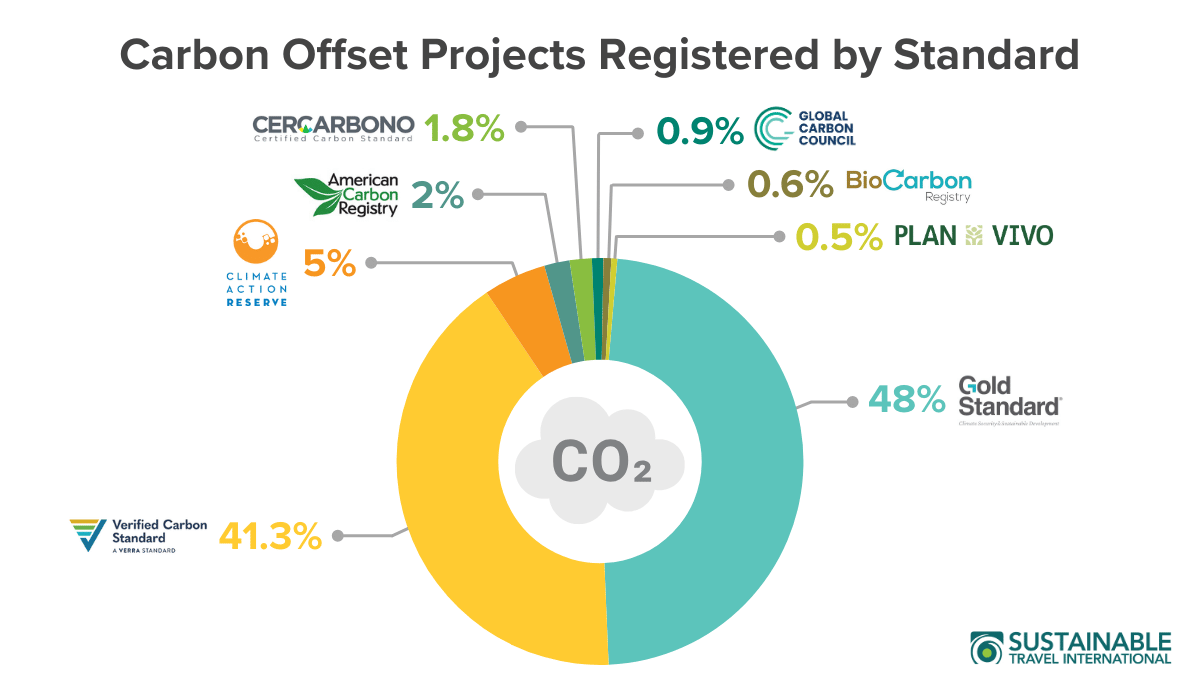
The voluntary market relies on several established verification standards, most notably Verra’s Verified Carbon Standard (VCS) and the Gold Standard. Additional frameworks include the American Carbon Registry, the Climate Action Reserve, and Plan Vivo. Meanwhile, newer standards such as Puro.earth and Carbon Standards International have emerged to specifically support innovative carbon removal and sequestration technologies.
Each standard employs a distinct approach, often specializing in specific project types, geographic regions, or methodologies. Historically, the Verified Carbon Standard and the Gold Standard have accounted for the vast majority of carbon offset projects registered globally, setting the benchmark for how industrial, forestry, and community-based initiatives are evaluated.
Key Principles of High-Quality Carbon Offsets
Beyond simply evaluating whether a project reduces emissions on paper, robust verification standards delve into the long-term reliability and real-world meaning of those reductions. This evaluation process involves asking critical questions: Would the project have materialized organically without the financial influx from carbon credits? Could the initiative inadvertently cause adverse environmental or social impacts elsewhere? And just as importantly, how long will the removed carbon genuinely stay out of the atmosphere?
These fundamental inquiries align with core concepts governing carbon accounting integrity, such as additionality, permanence, and leakage prevention. High-quality projects actively mitigate risks by adhering to strict regulatory thresholds set by standards, utilizing conservative scientific estimates, developing comprehensive contingency plans for potential unintended consequences, and maintaining carbon buffers to account for unforeseen disruptions like natural disasters or policy shifts. Behind every trustworthy carbon credit is a meticulous, multi-step validation and monitoring lifecycle designed to confirm that the reported emissions reductions are authentic.
Project Co-Benefits and Ecosystem Value
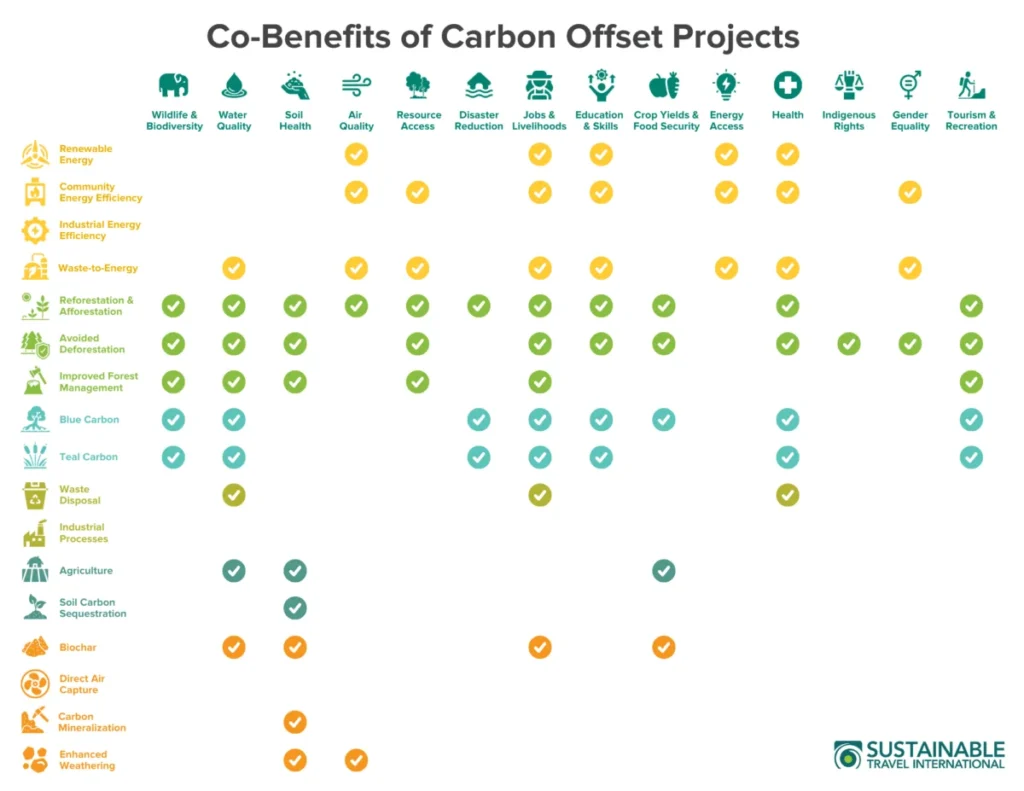
While the primary objective of any carbon offset project is the reduction or removal of greenhouse gases, many initiatives deliver valuable secondary advantages known as co-benefits. These benefits directly support local communities, fragile ecosystems, and regional economies, though their scale and nature vary significantly depending on the project’s specific design, geographical location, and degree of local community engagement.
For instance, forestry and land-use conservation projects frequently protect endangered species habitats while securing vital land rights and resource access for Indigenous populations. By addressing socioeconomic challenges like poverty—often recognized as a root cause of deforestation—these projects can concurrently improve local healthcare, educational resources, and sustainable livelihoods. Similarly, blue and teal carbon initiatives protect coastal ecosystems from severe storms and shoreline erosion while simultaneously bolstering marine biodiversity and local fisheries.
Renewable energy and energy efficiency projects offer another dimension of impact, particularly by expanding access to clean and reliable power in underserved or rural communities. The deployment of cleaner technologies frequently translates to improved local air quality, yielding tangible health benefits, particularly for women and children who are disproportionately affected by indoor air pollution.
In contrast, highly technical or industrial projects often yield fewer visible community co-benefits. While these ancillary benefits do not replace the fundamental requirement for verified carbon performance, they offer a more holistic picture of a project’s comprehensive value to society and the environment.
Strengthening Oversight and Accountability in the Carbon Market
As scientific understanding, technological capabilities, and field experience advance, the oversight frameworks governing carbon offsets are undergoing continuous refinement. Major standard-setting bodies regularly update their methodologies to reflect modern climate science and eliminate historical vulnerabilities. For example, Verra’s revised methodology for avoided deforestation directly confronts prior criticisms regarding potential over-crediting driven by inflated baseline projections of deforestation risk. Instead of permitting individual projects to calculate their own isolated baselines, the updated framework establishes standardized, region-wide baselines derived from reliable, independent data to ensure greater consistency and credibility.
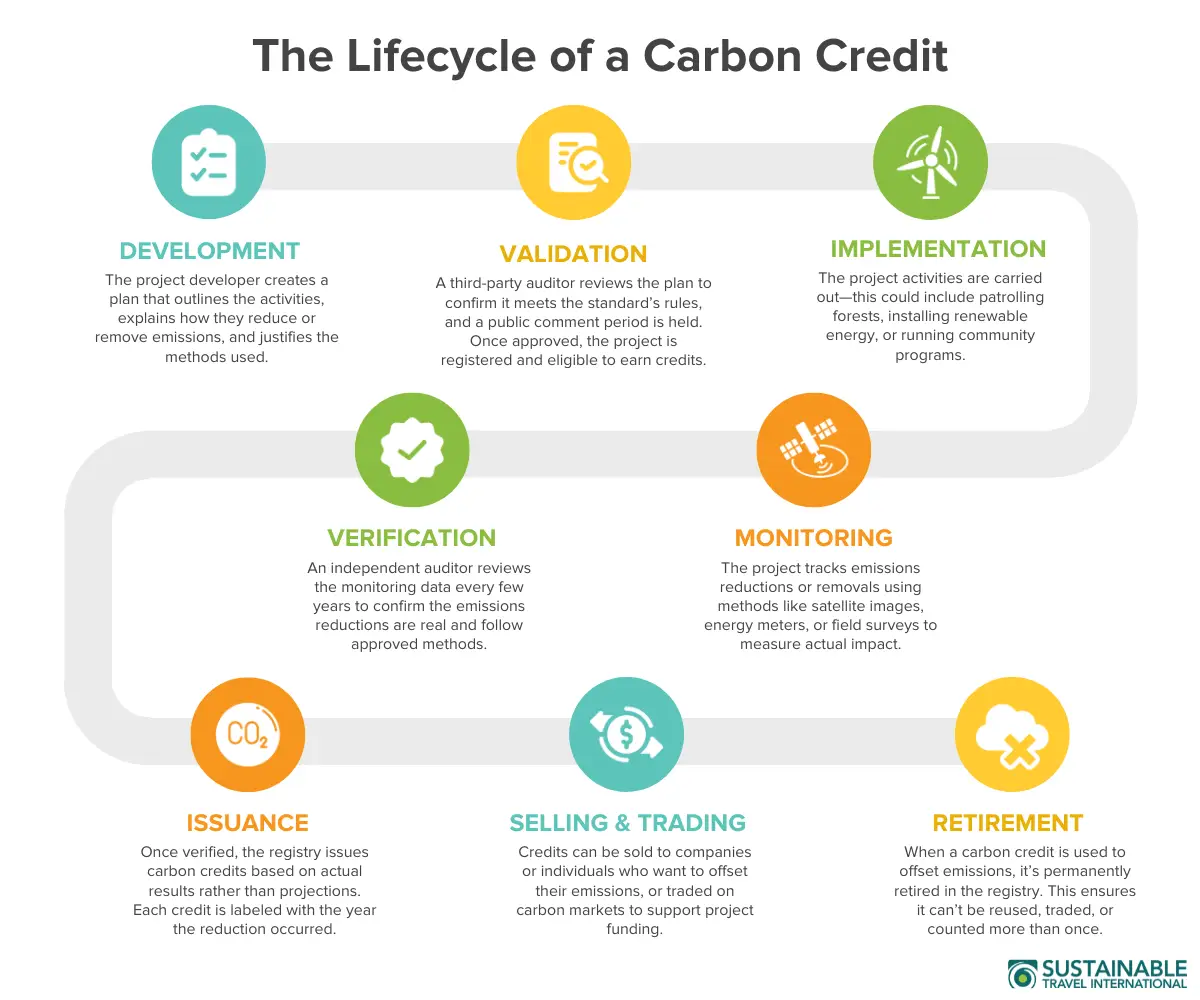
Concurrently, cutting-edge digital technologies are transforming how projects are monitored, reported, and verified over time. Digital Monitoring, Reporting, and Verification (MRV) tools—including remote sensors, IoT smart meters, high-resolution satellite imagery, aerial drones, and mobile applications—enable the continuous collection of real-time project performance data. This technological leap enhances monitoring precision and allows project developers and auditors to respond swiftly to environmental shifts on the ground.
To provide an additional layer of market oversight, independent watchdogs like the Integrity Council for the Voluntary Carbon Market are actively evaluating existing carbon crediting programs against strict benchmarks known as Core Carbon Principles. The CCP label is awarded exclusively to credits that demonstrate exceptional climate impact, robust environmental and social integrity, and transparent carbon accounting practices. Complementing these institutional efforts, independent rating agencies such as Sylvera provide granular market transparency by scoring individual carbon projects based on rigorous assessments of additionality, permanence, and co-benefits.
Ultimately, identifying and supporting high-quality carbon offsets requires a careful examination of verification credentials, long-term permanence, and broader community impacts. Organizations and individuals seeking to neutralize their emissions footprint increasingly rely on thorough internal due diligence and independent market evaluations to ensure their investments drive authentic, lasting environmental progress.
Related News