The 1.5°C Threshold: Why the Global Climate "Overshoot" Matters for Our Future
Article Editorial Team
The world is rapidly approaching a climatic crossroads. According to the latest findings from the United Nations Environment Programme (UNEP), global average temperatures are poised to exceed the 1.5°C increase above pre-industrial levels—a threshold long identified by the international scientific community as the critical boundary for avoiding the most catastrophic impacts of climate change. The new UNEP report, titled Limiting Overshoot, delivers a sobering assessment: despite years of global rhetoric and the implementation of national climate pledges, our collective action has simply not been fast enough to keep the planet within that 1.5°C limit.
Even if every nation fully implements its current climate plan, and even if we account for the ambitious net-zero targets currently on the table, the world is still trending toward a peak temperature that surpasses the 1.5°C marker. This is no longer a distant theoretical scenario; it is an impending reality that will fundamentally reshape the environmental landscape for humans and wildlife alike.
Understanding the "Overshoot, Peak, and Decline" Pathway
The core of the UNEP report is a recognition of the "overshoot" phenomenon. Because we have failed to curb emissions rapidly enough to stay under the 1.5°C ceiling, the global goal has shifted. We must now navigate a pathway characterized by an "overshoot, peak, and decline" trajectory. This strategy involves limiting how far temperatures rise past the 1.5°C threshold, ensuring that the peak is as low as possible, and then deploying strategies to eventually bring temperatures back down.
The urgency of this approach cannot be overstated. Every fraction of a degree of temperature rise we avoid—and every day we spend in the overshoot zone—directly correlates to the severity of climate-related damages. By shortening the duration of this overshoot, we reduce the risk of triggering irreversible tipping points, such as the catastrophic melting of polar ice sheets or the collapse of vital ocean currents. The report makes it clear that while 1.5°C may soon be in the rearview mirror, preventing a runaway warming scenario remains our best remaining option for long-term survival.
Birds as Sentinels of a Changing World
To understand the tangible consequences of this warming, we need only look to the natural world. Birds serve as powerful "sentinels" of environmental change, their survival and migratory patterns acting as a barometer for the health of our ecosystems. The Audubon Society’s Survival by Degrees report highlights the direct link between warming increments and the threat of extinction.
At 1.5°C, approximately 47 percent of the 604 North American bird species studied are deemed vulnerable to significant range loss. However, as that warming climbs toward 3°C, that number surges to 63 percent. The math of mitigation is striking: by holding peak warming closer to 1.5°C rather than allowing it to reach 3°C, we effectively lower the risk for 76 percent of currently vulnerable species. Specifically, 146 bird species could be spared from the brink of high vulnerability if we keep warming in check.
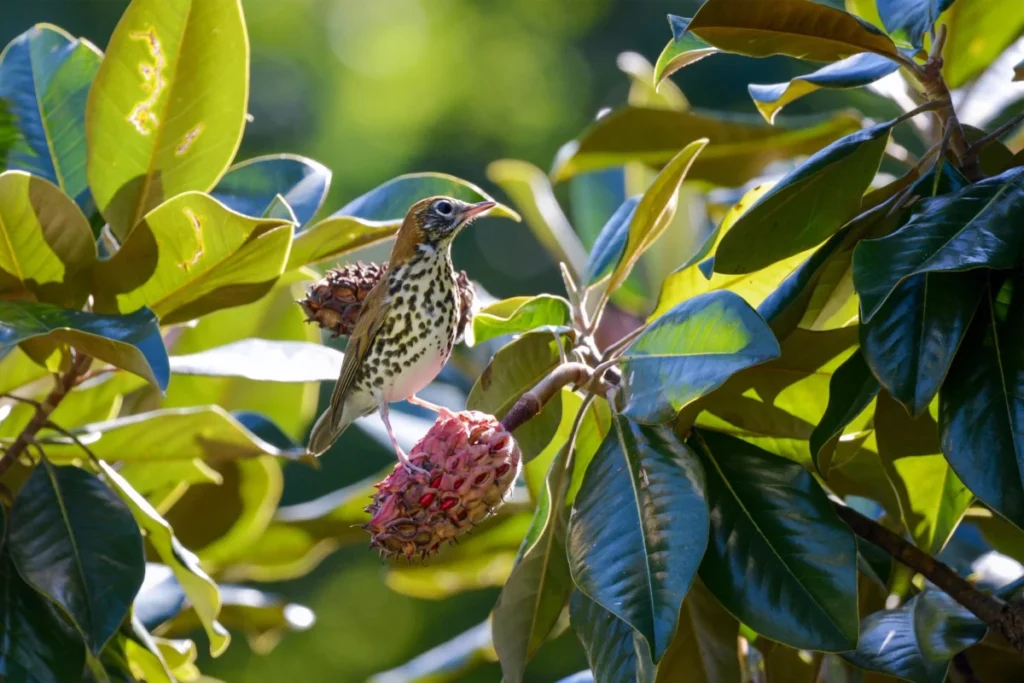
Consider the Wood Thrush, a species that is currently a bellwether for forest health. At a 3°C warming scenario, the Wood Thrush is projected to lose a staggering 57 percent of its breeding range. If we manage to stabilize the climate near 1.5°C, the bird’s vulnerability remains low, significantly increasing its likelihood of long-term survival. This is not merely about preserving a single species; it is about maintaining the complex web of life that sustains our forests and fields.
The threats are compounding. Higher temperatures do not act in isolation; they fuel a cascade of climate-related hazards. At a 3°C warming level, nearly every bird species in the lower 48 states would face multiple, simultaneous threats during their critical breeding seasons—ranging from extreme heat and wildfire smoke to catastrophic floods and sea-level rise. In contrast, limiting warming to 1.5°C means that most species and communities would likely face only one of these major threats, providing a much higher buffer for resilience and recovery. Protecting birds, therefore, is inherently linked to protecting human communities from the same coastal erosion, extreme fire weather, and heatwaves that threaten our own infrastructure.
The Path to Net-Negative Emissions
The UNEP report draws a crucial distinction between "net-zero" and "net-negative" emissions. Reaching net-zero—where we emit only as much carbon as we remove—is essential to halting the rise in global temperatures. However, to bring temperatures back down below the 1.5°C threshold once we have exceeded it, we must achieve net-negative emissions. This means actively removing more carbon from the atmosphere than we release.
Both objectives necessitate a massive, global transition to renewable energy. This requires a modernized electrical grid capable of handling intermittent clean energy sources. However, this transition must be handled with ecological sensitivity. Research from the Birds and Transmission report by Audubon reveals that about one-third of existing and planned transmission lines overlap with areas of high importance for bird conservation. This presents a unique challenge: we must build the grid of the future without destroying the habitats of the present. Consequently, conservationists are working closely with energy developers to utilize bird-friendly design elements and careful infrastructure routing to minimize the footprint of our clean energy expansion.
Nature-based solutions are equally vital to this effort. Reforestation, wetland restoration, and the protection of grasslands are not just aesthetic choices; they are active climate mitigation tools. Habitat conservation allows ecosystems to sequester carbon while simultaneously providing refuges for climate-vulnerable species. Audubon’s Natural Climate Solutions research indicates that conserving and restoring priority forests, grasslands, and wetlands could deliver up to 23 percent of the U.S. commitments made under the 2016 Paris Agreement. By protecting these high-value carbon sinks, we are simultaneously building the resilience of the ecosystems that birds and humans depend upon.
The Role of Private Land and Individual Action
The fight against climate change is not restricted to international summits; it is fought on the ground, acre by acre. In the United States, approximately two-thirds of the priority habitat for bird conservation is held in private hands. This reality places farmers, ranchers, and forest owners at the very center of the conservation movement.
Programs like Audubon’s Conservation Ranching initiative have demonstrated that the economy and the environment need not be at odds. By certifying ranches managed specifically to support grassland birds, this voluntary program now spans nearly 3 million acres across more than 100 ranches. The resulting beef and bison products, marked with the "Audubon Certified Bird-Friendly" seal, connect conscious consumers directly to the restoration of our prairies. This is critical, as grassland birds are currently declining faster than any other group of birds in North America. By managing these lands for biodiversity, we also protect the soil, which acts as a massive carbon reservoir.
The same principles apply to our forests. Through programs like the Bird-Friendly Maple initiative, producers are incentivized to manage their sugarbushes in ways that provide nesting and migratory support for birds like the Wood Thrush. Even at the individual level, the cumulative impact is significant. Homeowners and community members can contribute by planting native vegetation and reducing urban hazards, such as window collisions, which claim millions of birds annually.
The UNEP Limiting Overshoot report paints an undeniably stark picture of our current environmental trajectory. It warns that we are entering a period of significant challenge, where the climate will test the limits of both human adaptation and ecological resilience. However, the report also provides a roadmap. By understanding the climate as a series of manageable thresholds, by investing in nature-based solutions, and by empowering private landowners to be stewards of their own soil, we can mitigate the worst of the coming changes. Birds are our messengers in this crisis, showing us the risks of inaction and the profound rewards of a more sustainable, thoughtful approach to our shared planet. The challenge is immense, but the solutions are within reach if we act with the speed and scale that the science now demands.
Related News