Beyond the Corvids: Is Our Understanding of Avian Intelligence Obscured by Bias?
Article Editorial Team
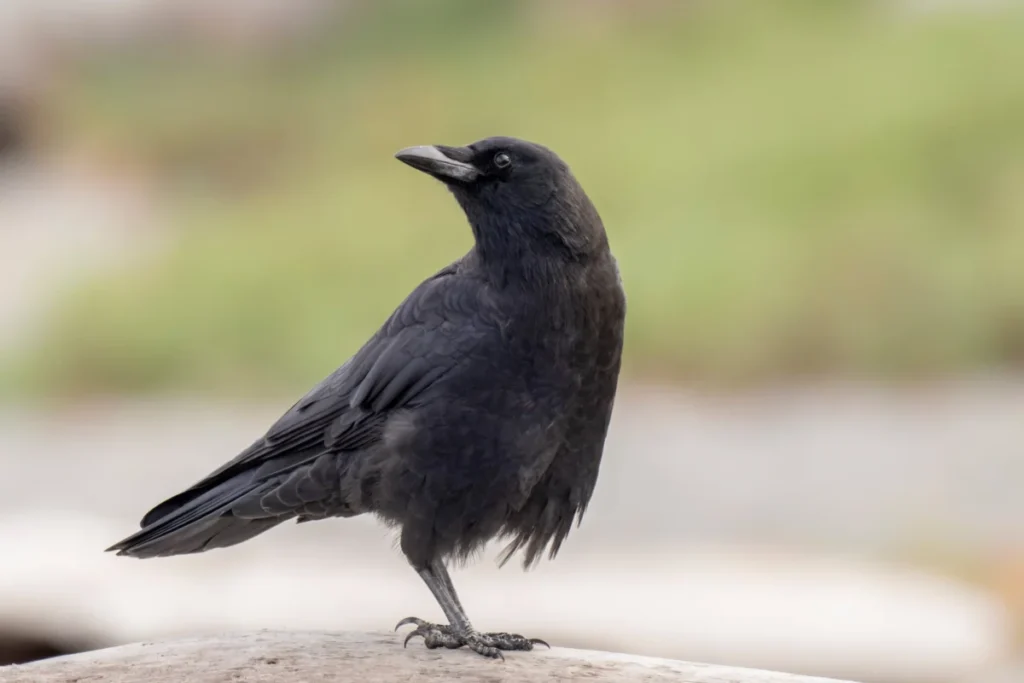
For decades, the pantheon of avian intelligence has been dominated by a select few. When we think of "smart" birds, our minds instinctively drift to the corvids—the ravens, crows, and jays capable of crafting tools and solving complex puzzles—or the parrots, whose mimicry and problem-solving skills have long drawn comparisons to the cognitive abilities of primates and young children. These birds are the poster children of avian cognition, the species we hold up as the gold standard for brainpower in the natural world.
However, a provocative new analysis suggests that this perceived hierarchy of bird intelligence may be built on a foundation of scientific blind spots. According to a comprehensive review of the last 25 years of research, a staggering 98 percent of the world’s bird species have never had their intelligence formally tested. The result is a narrative of "corvid supremacy" that may have more to do with convenience and confirmation bias than with actual cognitive distribution across the avian tree of life.
The Problem-Solving Paradox
The catalyst for this reassessment began with Kelsey McCune, a behavioral ecologist whose work during her Ph.D. at the University of Washington challenged her own assumptions. While studying the problem-solving prowess of wild Mexican Jays and California Scrub-Jays, McCune designed a puzzle box—a wooden apparatus equipped with compartments, doors, and a high-value incentive: peanuts.
The goal was to observe how these notoriously sharp jays navigated the contraption. What she witnessed, however, was far more revealing. As the study progressed, a variety of other birds began to frequent the setup. Species not typically associated with high-level cognitive research, including chickadees, towhees, and Downy Woodpeckers, approached the box with curiosity. To McCune’s surprise, these "untested" birds often engaged with the puzzle, and in some instances, they solved the task more efficiently than the jays themselves.
Later, when McCune shifted her focus to Great-tailed Grackles—members of the blackbird family—she found that they performed just as well as, if not better than, their corvid counterparts. These observations prompted a shift in perspective: if birds we rarely consider "geniuses" are capable of solving the same problems as the celebrated corvids, how can we be certain that we have accurately identified the smartest birds in the world?
The Avian Cognition Gap
To investigate this, McCune teamed up with colleague Jeffrey Katz to conduct a deep dive into the state of avian cognition research. They reviewed 937 experimental studies published over the last quarter-century. The findings were sobering. Of the more than 11,000 known bird species globally, only 194—fewer than 2 percent—have ever been the subject of an experimental cognition study.
The geographic and taxonomic scope of this research is equally narrow. Researchers have studied species from less than one-third of all avian families. The overwhelming majority of the literature is concentrated in just five families: Corvidae, Columbidae (pigeons and doves), Paridae (tits and chickadees), Phasianidae (chickens, quail, and pheasants), and Psittacidae (parrots). Collectively, these five families account for 64 percent of all studies in the field.
Even within these families, the bias is striking. For instance, there are 306 known species of pigeons and doves, yet 132 of the 135 studies conducted on this family focused exclusively on the Rock Pigeon. This concentration of research creates a self-reinforcing cycle. When scientists consistently study the same species, they naturally accumulate more data on those species, further cementing their reputation as the "smart" ones, while the vast majority of birds remain a mystery.
Furthermore, direct comparisons between corvids and other families are remarkably rare. In the 937 studies reviewed, only five directly pitted corvids against other groups. The results of those few studies were mixed: while corvids were superior in two instances, they were matched by non-corvids in two others. A notable 2024 study further muddied the waters by challenging 15 species to retrieve food from various obstacles. In that experiment, the Blue Jay was outperformed by five different songbirds, including the American Robin, the European Starling, and the Tufted Titmouse, which emerged as the top problem solver.
The Roots of Scientific Convenience
The reasons for this lopsided research landscape are rooted in both the history of science and the practical realities of fieldwork. Early 20th-century scientists, who laid the groundwork for modern avian cognition, needed subjects that were easy to manage in a laboratory setting. Pigeons and quails were ideal candidates: they were inexpensive to acquire, simple to breed, and exhibited a high tolerance for confinement.
As decades passed, these species became the default "lab rats" of the bird world. In the 21st century, the field saw a surge of interest in corvids, driven by decades of anecdotal evidence of their brilliance. Researchers found that it was far easier to build upon existing methodologies for these well-known species than to start from scratch with a species that had no established protocol.
"These birds are easy to acquire," McCune notes. "You don’t need strict permits. The methods for testing questions in these species are well-developed."
There is also a human element at play: visibility. We tend to notice the intelligence of the birds we see most often. American Crows and Rock Pigeons are ubiquitous in urban landscapes, allowing us to observe behaviors that seem remarkably sophisticated, such as crows dropping nuts on roads to be cracked by passing cars or pigeons navigating complex city environments. Similarly, the long history of the parrot pet trade has given humans a unique, intimate look at their capacity for mimicry and complex interaction. Because these birds are already in our orbit, we are primed to notice their intelligence, potentially leading to confirmation bias where we ignore the similar behaviors of less "familiar" species.
Finding the Hidden Geniuses
The future of avian cognition research is beginning to shift, however. Advances in technology, such as improved microchip tagging and automated, computerized feeders, are allowing scientists to study wild bird populations with unprecedented accuracy.
McCune is currently leading an effort to move beyond the traditional lab model. By tagging various species in the wild and providing them with access to computerized feeders, her team can track exactly which birds interact with the technology and which successfully learn to navigate the device to receive a reward. Crucially, this setup allows for the simultaneous study of a whole community of birds, rather than isolating one species in a cage. This methodology promises to reveal how different species compare under the same conditions, providing a much more accurate picture of cognitive distribution.
The implications of this research extend far beyond the quest to build a "smart-bird leaderboard." As the world grapples with rapid environmental changes, including habitat loss, shifting food supplies, and disrupted migration routes, understanding avian behavioral flexibility is a matter of conservation survival.
By identifying which species possess the cognitive plasticity to adapt to new challenges, researchers can better design strategies to protect vulnerable populations. We are learning that the ability to solve a puzzle is not just a parlor trick for crows; it is a vital tool for navigating an increasingly human-altered world. As the scientific community begins to look beyond the "usual suspects," we may find that intelligence is far more widespread among the avian population than we ever dared to imagine. By acknowledging the limits of our current knowledge, we open the door to discovering the brilliant minds hidden in our own backyards.
Related News