Corkscrew Swamp Sanctuary Reports October Rainfall Gains Amid Persistent Long-Term Hydrologic Deficit
Article Editorial Team
The Corkscrew Swamp Sanctuary has released its latest hydrologic and ecological assessment, painting a complex picture of a landscape experiencing a brief reprieve in rainfall while remaining locked in a stubborn, long-term water deficit. As the region navigates the transition into the dry season, the data collected by Audubon staff underscores the fragile balance of the sanctuary’s ecosystem and the ongoing challenges posed by shifting climate patterns and historical water management changes.
Rainfall Trends and the Cumulative Deficit
October brought a much-needed pulse of precipitation to the sanctuary, with recorded rainfall reaching 4.81 inches. This figure represents a notable 24% increase over the historical average for the month, providing a temporary boost to the local environment. However, when viewed through the wider lens of the seasonal cycle, the picture is more sobering. While the sanctuary has managed to capture 81% of the rainfall typically expected during the June-through-October window, the total accumulation remains insufficient to offset the broader, systemic water shortages that have plagued the region for years.
When evaluating the hydrologic year—a specialized timeframe used by water managers to track the balance of water movement—the sanctuary remains 19% below the expected rainfall levels for this point in the calendar. Perhaps more concerning is the persistent long-term deficit. Since November 2024, the sanctuary has faced a cumulative rainfall deficit of 28.5 inches. This massive shortfall acts as a silent pressure on the swamp’s internal hydrology, affecting everything from groundwater recharge to the saturation levels of the peat soils that define this unique ecosystem. Even with the positive performance of October’s storms, the cumulative deficit serves as a stark reminder of how much moisture the land requires to return to a state of long-term stability.
Analyzing Water Levels: A Historic Perspective
The implications of these rainfall patterns are most visible in the sanctuary’s surface water levels. As of November 2, the B-gauge, a critical instrument used by researchers to track water depths within the swamp, registered a reading of 2.10 feet. To understand the gravity of this number, one must look at the historical context of the sanctuary’s hydrology, particularly the significant shifts that occurred in the year 2000.
The current water level of 2.10 feet is lower than any record kept for this date prior to those systemic hydrologic changes at the turn of the millennium. When compared to the entirety of the record-keeping period—which began in 1957—the current depth is tied for the third-lowest level ever recorded for November 2. The only instances where the sanctuary saw lower water levels on this specific calendar date were in 2009, when the depth dropped to 1.9 feet, and in 2007, when it reached 2.07 feet. The 2019 reading also matched the current 2.10-foot measurement.
This historical comparison provides essential data for scientists attempting to model the future of the swamp. By tracking these low-water markers, the sanctuary team can better understand how prolonged periods of dryness influence the survival of aquatic species and the overall health of the forest. The consistency of these low-water dates, particularly over the last two decades, reflects the broader, cumulative impact of the regional water management decisions that have fundamentally altered the flow of water into and out of the sanctuary.
Research Team Activities: Monitoring Biodiversity
Despite the challenging hydrologic conditions, the sanctuary’s research team has maintained a rigorous schedule of monitoring to track the health of the swamp’s inhabitants. This past month marked the initiation of the first aquatic fauna monitoring session of the new hydrologic year. This critical work involves surveying the water to identify the presence and diversity of species that serve as indicators of the swamp’s overall vitality.
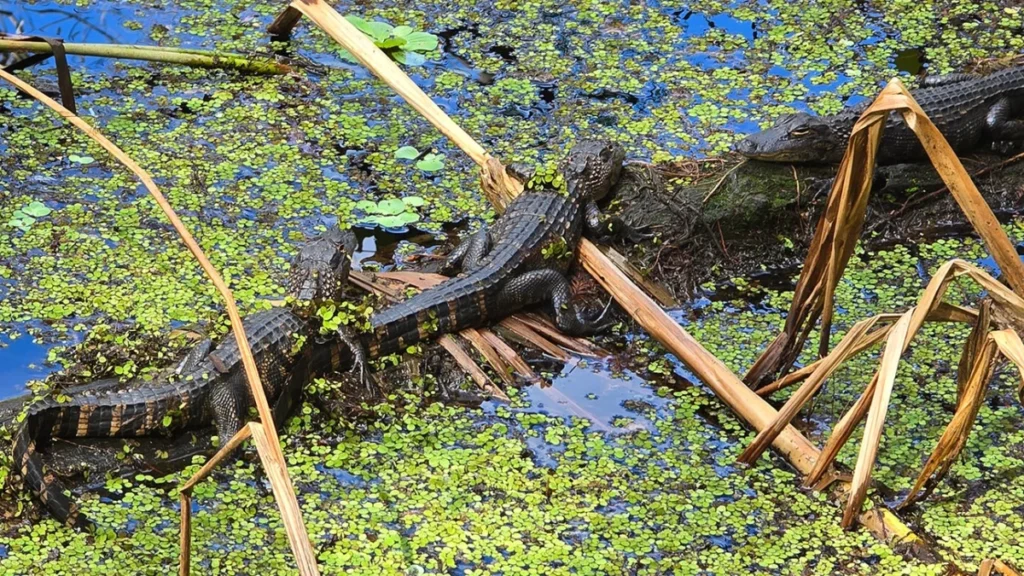
During these recent surveys, the team encountered a diverse array of life, demonstrating the resilience of the ecosystem even in times of low water. Among the notable findings were the native green watersnake and the least killifish, alongside an abundance of native Eastern mosquitofish. The team also observed native frog tadpoles, suggesting that despite the water levels, reproductive cycles are continuing. However, the presence of the invasive pike killifish served as a reminder of the constant ecological pressures faced by native species in the sanctuary. These invasive populations can outcompete native fish for resources, and their presence is monitored closely by researchers to assess the long-term impact on the food web. The research team intends to repeat these monitoring efforts in December and January, and again in the early spring, provided that water levels remain sufficient to allow for safe and accurate data collection.
Collaborative Conservation and Technology
Beyond the field work conducted in the swamps and marshes, the sanctuary continues to leverage the power of technology and collaborative partnerships to advance its conservation mission. A significant component of this effort is the ongoing participation in the Snapshot USA project, a nationwide initiative that utilizes wildlife camera traps to monitor animal populations.
The volume of data generated by these cameras is immense, requiring careful, manual review to identify the various species captured in each frame. The sanctuary has made remarkable progress in this area, largely due to the dedicated efforts of the Dr. Allyn Golub Conservation Assistants. To date, this team has successfully processed and identified a staggering 54,281 individual images. This work is not merely an administrative task; it is a vital scientific contribution that helps researchers understand population trends, migration patterns, and the presence of wildlife within the sanctuary’s boundaries. By converting thousands of raw photographs into structured, usable data, the assistants provide the raw material necessary for informed conservation decisions.
The dual approach of on-the-ground ecological monitoring and high-volume data analysis highlights the multifaceted nature of the sanctuary’s operations. Whether they are wading through low-water marshes to identify fish species or sorting through thousands of wildlife camera images in an office, the staff at Corkscrew Swamp Sanctuary remains committed to a data-driven approach to stewardship.
As the sanctuary moves further into the dry season, the combination of historical data, real-time rainfall tracking, and field-based biodiversity assessments will continue to be the primary tools used to navigate the uncertainties of the future. The persistent 28.5-inch rainfall deficit and the near-record-low water levels serve as constant reminders of the volatility of the local climate, yet the continued presence of a diverse range of native species and the tireless work of the research and conservation teams provide a hopeful foundation for the ongoing protection of this critical habitat. Through these sustained efforts, the sanctuary continues to document the story of the swamp, providing the evidence needed to advocate for its preservation in an ever-changing environment.
Related News